Table of Content
MicroLogix PLCs: Overview, Limitations and Replacement Options

Written by
Artur Solakhyan
Freelance copywriter and editor
Published at23 March 2026
Estimated reading time5 min read

Share This:
MicroLogix PLCs are among the most widely deployed small-scale programmable logic controllers used in industrial automation. Developed by Allen-Bradley, the MicroLogix family was designed for compact machines, standalone equipment and basic automation tasks requiring reliable control with limited system complexity. While these controllers remain operational in many facilities today, engineers must understand their capabilities, limitations and long-term support status. Evaluating replacement options is increasingly important as hardware ages and newer automation platforms offer improved networking, performance and system integration. This guide explains how MicroLogix PLCs work, where they are used and what alternatives exist for modern automation projects.
What Are MicroLogix PLCs?
Overview of the MicroLogix Family
The MicroLogix PLC family is part of the broader portfolio of Rockwell Automation control systems. These controllers were developed to provide cost-effective programmable logic control for small automation tasks without requiring large PLC platforms.
Several models exist within the series:
- MicroLogix 1000 PLC – Entry-level controller designed for simple machine automation with fixed I/O configurations.
- MicroLogix 1100 – Added Ethernet communication and increased memory compared with earlier models.
- MicroLogix 1200 PLC – Introduced modular expansion options and improved processing performance.
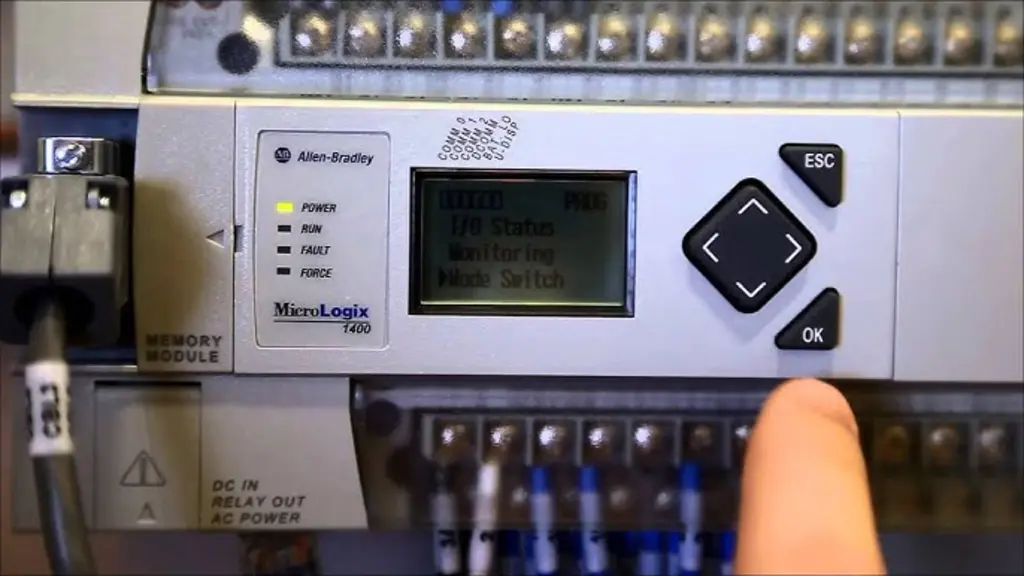
- Allen-Bradley PLC MicroLogix 1400 – A widely used model offering Ethernet connectivity, an integrated LCD display and higher program memory.
- MicroLogix 1500 – A modular controller supporting larger applications and additional I/O modules.
These controllers were commonly used in standalone machines, packaging equipment, small conveyor systems and other automation environments where control requirements were moderate.
How MicroLogix Compares to Other Rockwell PLCs
Compared with modern Rockwell controllers, MicroLogix platforms provide limited scalability and networking capability. While they are reliable for simple control tasks, they lack many features available in newer PLC architectures. For example:
- CompactLogix controllers support larger systems and modern networking capabilities.
- Micro800 controllers provide updated hardware and improved integration for smaller automation projects.
- Higher-tier controllers within the Rockwell portfolio provide more processing power and system flexibility.
Common Industrial Applications
MicroLogix PLCs have been widely used in industries that require reliable machine-level automation without extensive system complexity. Typical applications include:
- Small manufacturing machines
- Packaging and labeling equipment
- Conveyor and material handling systems
- Standalone process equipment
Their compact design and relatively simple configuration made them popular among machine builders and system integrators for many years.
MicroLogix Series Components and Capabilities
MicroLogix 1000, 1100, 1200
Early controllers such as the MicroLogix 1000 PLC and MicroLogix 1200 PLC were designed for small-scale automation tasks where limited inputs and outputs were sufficient.
Typical features included:
- Fixed or limited modular I/O configurations
- Basic program memory capacity
- RS-232 communication interfaces
- Ladder logic programming using RSLogix 500
Despite their limitations, these controllers offered dependable operation in applications with stable control requirements.
MicroLogix 1400 and 1500
Later models such as the Allen-Bradley PLC MicroLogix 1400 introduced additional features designed to extend system capabilities.
Improvements included:
- Integrated Ethernet communication
- Larger program memory
- Built-in LCD display for diagnostics
- Expanded data logging capabilities
The MicroLogix 1500 series further increased system flexibility by allowing modular processor and I/O configurations suitable for moderately complex automation tasks.
Communication and Expansion Options
MicroLogix controllers support several communication interfaces that allow integration with other automation equipment.
Common interfaces include:
- RS-232 serial communication
- Ethernet connectivity (in later models)
- DH+ networking in certain configurations
Expansion modules can be added to extend I/O capacity, such as memory modules including the Allen Bradley 1766-MM1 used for program storage.
For direct connection to programming systems, cables such as the Allen Bradley USB-1761-CBLPM02 are commonly used when configuring or maintaining MicroLogix controllers.
Limitations of MicroLogix PLCs
Outdated Programming Environment
MicroLogix controllers rely on RSLogix 500, which is considered outdated compared with modern development platforms. While functional, the software lacks many features present in newer engineering tools.
Limitations include:
- Reduced compatibility with modern operating systems
- Limited integration with advanced automation platforms
- Lack of modern programming tools available in current PLC software environments
Hardware Constraints
The hardware design of MicroLogix controllers reflects the technology available at the time they were introduced. As a result, these systems face several limitations.
Common constraints include:
- Limited memory capacity
- Restricted I/O expansion capabilities
- Lower processing performance compared with modern PLCs
These factors can restrict system upgrades or modifications when production requirements increase.
Networking and Connectivity Challenges
MicroLogix systems were designed before widespread adoption of advanced industrial networking standards. As a result:
- Integration with modern Ethernet/IP architectures can be limited
- Remote monitoring and cloud connectivity options are minimal
- Network performance is restricted compared with newer PLC platforms
Modern control systems often require higher data throughput and improved connectivity that MicroLogix controllers cannot easily support.
Risks of Using Obsolete MicroLogix PLCs
Part Scarcity and Lead Times
Many MicroLogix controllers and related components have reached end-of-life status. As production has stopped, replacement hardware may become difficult to source.
Extended lead times or secondary market sourcing can introduce uncertainty into maintenance planning.
Software Support Limitations
Software support for MicroLogix systems continues to decline as engineering platforms evolve. Compatibility issues may arise when running RSLogix 500 on newer operating systems or integrating MicroLogix controllers into modern control environments.
Operational and Safety Concerns
Older controllers may also present operational risks as hardware ages. Increased maintenance requirements and unexpected failures can occur, especially in facilities where controllers have been running continuously for many years.
When to Replace vs Maintain MicroLogix PLCs
Signs You Should Replace Your PLC
Several indicators suggest that a MicroLogix system may require replacement. These include:
- Aging hardware nearing end-of-life
- Limited ability to expand I/O
- Incompatibility with modern networking requirements
- Reduced availability of spare parts
In such cases, migrating to a newer PLC platform may provide improved reliability and system performance.
Situations to Maintain Legacy Systems
In some scenarios, maintaining existing AB MicroLogix PLC systems may still be practical. Examples include:
- Small standalone machines with stable operation
- Temporary production lines
- Low-risk automation tasks with minimal upgrade requirements
When systems continue to operate reliably, maintaining the existing controller may be the most economical option.
Cost-Benefit Considerations
When evaluating replacement versus maintenance, engineers should consider both operational risks and long-term costs. Upgrading may require initial investment but can reduce downtime risk and improve system integration capabilities.
Replacement Options for MicroLogix PLCs
Rockwell Automation Alternatives
Several modern PLC platforms can replace MicroLogix controllers depending on system size and application requirements. Common alternatives include:
- Micro800 controllers for small machines
- CompactLogix for mid-sized automation systems
- ControlLogix for large-scale industrial automation
Some systems may also require associated components such as the ControlLogix power supply module when transitioning to larger control architectures.
Third-Party or Open-Standard PLCs
In certain projects, engineers may evaluate PLC platforms from other automation vendors. These systems may provide cost advantages or specialized functionality depending on the application.
However, compatibility with existing automation infrastructure must be carefully considered.
Choosing the Right Replacement
Selecting a replacement PLC requires evaluation of several factors:
- System complexity and I/O requirements
- Network architecture and communication protocols
- Long-term availability of hardware and software support
A broader overview of how these components interact within automation systems can be found in the guide to the Allen-Bradley product ecosystem.
Migration and Integration Guide

Converting Existing Ladder Logic
When replacing MicroLogix controllers, existing ladder logic programs may need to be converted for use on newer PLC platforms. While certain migration tools are available, manual adjustments are often required.
Engineers should review program structure, instructions and addressing formats during the migration process.
Rewiring and I/O Mapping
Physical wiring may also require modification when replacing controllers. Careful mapping of input and output signals ensures that sensors, actuators and other field devices operate correctly after installation.
Testing and Commissioning
Before placing the system back into production, thorough testing should be performed. Functional testing verifies program logic, communication with external devices and proper operation of field equipment.
How to Select the Best PLC for Your Project
Assessing I/O and Expansion Needs
When choosing a PLC, engineers should evaluate both current and future I/O requirements. Selecting a platform that allows expansion can prevent future system redesigns.
Communication and Networking Considerations
Modern automation systems often require integration with supervisory systems, industrial networks and data platforms. Controllers must support the communication protocols needed for these connections.
Network integration may also involve drives and motion control systems, such as those discussed in the Guide to Allen-Bradley drives.
Long-Term Support and Reliability
Another critical factor is long-term support. Engineers should consider product lifecycle status, software updates and availability of replacement components when selecting automation hardware.
Working with a trusted distributor of Allen-Bradley products can help ensure consistent access to genuine components and technical support.
Conclusion
MicroLogix PLCs played an important role in the evolution of small-scale industrial automation. Their reliability and simplicity made them widely adopted across many industries. However, as automation technology continues to advance, the limitations of these controllers become increasingly apparent.
Understanding when to maintain existing systems and when to migrate to modern PLC platforms is essential for maintaining reliable industrial operations. Careful planning, proper hardware selection and structured migration processes help ensure smooth transitions to newer automation technologies.
FAQ
Many MicroLogix models have reached or are approaching end-of-life status. While some support remains available, sourcing replacement hardware may become increasingly difficult.
MicroLogix controllers are programmed using RSLogix 500, which supports ladder logic programming and system configuration.
In some cases, ladder logic programs can be converted or adapted when migrating to newer PLC platforms. However, manual modifications are often required depending on the target controller.
Common migration options include Micro800 controllers for smaller systems, CompactLogix for mid-level automation and ControlLogix platforms for large and complex industrial environments.



Have a question?
If you didn't find the automation part you were looking for, our support team is here to help. Just contact us, and we'll do our best to source the exact part you need. We're committed to meeting your needs and ensuring your satisfaction.
Contact Us Now