Table of Content
AC vs DC Motors: A Complete Comparison Guide

Written by
Artur Solakhyan
Freelance copywriter and editor
Published at23 January 2026
Estimated reading time5 min read
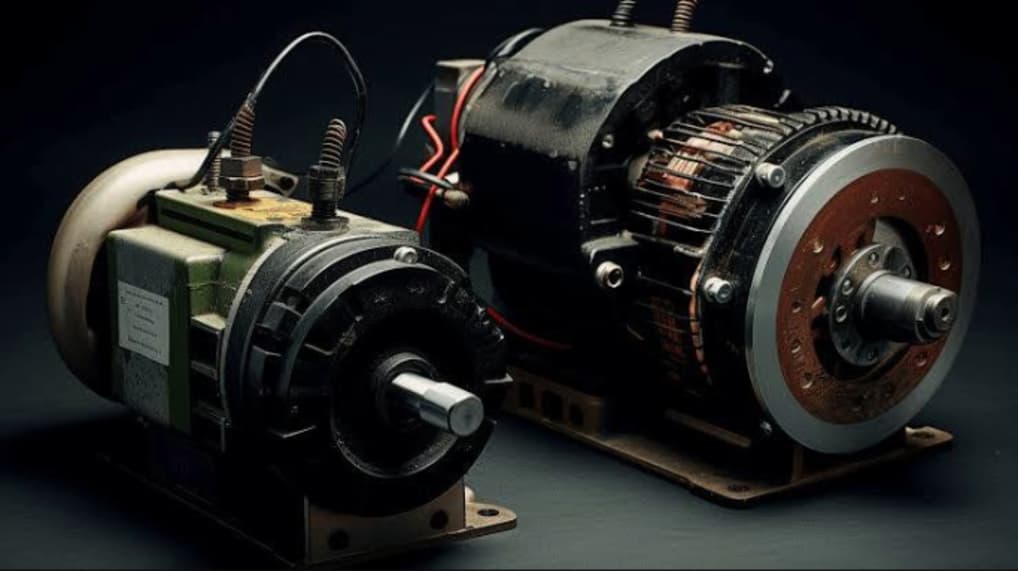
Share This:
Electric motors are at the core of modern industrial systems, driving everything from conveyors and pumps to robotics and CNC machines. When selecting the right motor for an application, one of the most common questions engineers and maintenance teams face is: AC vs DC motor – which option is better suited for a specific task?
This guide provides a detailed comparison of AC and DC motors, explaining how they work, where they are used and how their characteristics affect performance, maintenance and cost. By understanding the difference between AC and DC motor designs, industrial professionals can make more informed decisions for automation and machinery projects.
Introduction to AC and DC Motors
Electric motors convert electrical energy into mechanical motion and are essential components in industrial equipment. Choosing the correct motor type directly impacts operational reliability, control accuracy, energy use and long-term maintenance requirements.
Understanding the differences between AC and DC motors is especially important in industrial automation, where motor performance must align with load behavior, speed control needs and system architecture.
Importance of Electric Motors in Industry
Electric motors are used in nearly every industrial environment, including manufacturing, processing, logistics and energy production. They power machines that require precise motion control as well as systems that operate continuously under heavy loads.
In automation-focused environments, motors must integrate smoothly with control platforms, drives and power systems supplied by an automation parts distributor such as BSP Automation.
Overview of AC and DC Motors
AC motors operate using alternating current, while DC motors run on direct current. Although both convert electrical energy into mechanical rotation, they differ significantly in construction, control methods, speed behavior and maintenance needs. These differences influence where each motor type is most effective.
What is an AC Motor?
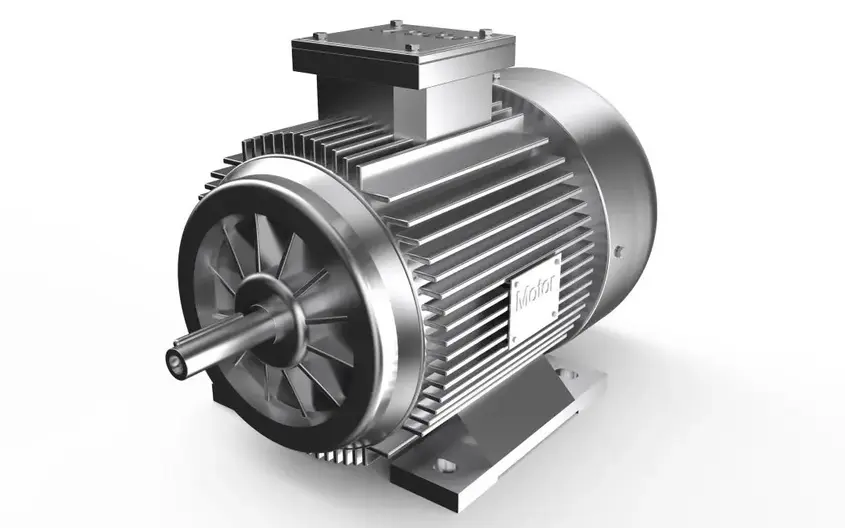
An AC motor operates using alternating current supplied from an electrical grid or industrial power system. AC motors are widely used due to their durability, simple construction and compatibility with standard industrial power sources.
Working Principle of AC Motors
AC motors generate rotation through a magnetic field created by alternating current in the stator windings. This rotating magnetic field induces current in the rotor, producing torque. The speed of an AC motor is primarily related to the supply frequency and the motor’s design.
Because AC power is readily available in industrial facilities, AC motors are often the default choice for many applications.
Types of AC Motors: Induction vs Synchronous
There are two main types of AC motors:
- Induction motors, which rely on electromagnetic induction and are widely used due to their simple design and reliability
- Synchronous motors, which rotate at a speed directly tied to the supply frequency and offer precise speed control
Induction motors dominate industrial use, while synchronous motors are selected when constant speed is critical.
Industrial Applications of AC Motors
AC motors are commonly used in:
- Pumps and fans
- Compressors
- Conveyors
- Mixers and agitators
- General-purpose machinery
They are often paired with variable frequency drives and supported by equipment such as Siemens AC power supplies for stable operation in industrial power systems. Many automation solutions also integrate AC motors with control platforms from Siemens and other major manufacturers.
What is a DC Motor?

A DC motor uses direct current to generate rotation and is known for precise speed and torque control. DC motors are often selected for applications requiring fast response and fine motion adjustment.
Working Principle of DC Motors
DC motors operate by supplying direct current to the armature windings, creating a magnetic field that interacts with the field produced by permanent magnets or field windings. This interaction produces rotational force.
Unlike AC motors, DC motor speed can be adjusted directly by changing the applied voltage, making control straightforward.
Types of DC Motors: Brushed vs Brushless
DC motors are generally classified into two categories:
- Brushed DC motors, which use brushes and a commutator to control current flow
- Brushless DC motors, which use electronic controllers instead of brushes
Brushless designs offer improved reliability and lower maintenance but require more complex control electronics.
Industrial Applications of DC Motors
DC motors are commonly found in:
- Robotics and positioning systems
- CNC machinery
- Hoists and lifts
- Packaging equipment
- Applications requiring controlled acceleration
In industrial automation, DC motors are frequently paired with DC operated drives and integrated into broader automation and control systems.
Key Differences Between AC and DC Motors
Understanding the difference between AC and DC motor designs helps clarify why one is chosen over the other in specific applications.
Construction and Components
AC motors generally have fewer components and no brushes, resulting in a simpler mechanical structure. DC motors, particularly brushed types, include commutators and brushes that require periodic inspection and replacement.
Power Supply and Control
AC motors rely on alternating current and typically require a variable frequency drive for speed control. DC motors operate on direct current and allow speed regulation through voltage control or dedicated electronic drives.
Speed and Torque Characteristics
DC motors provide strong torque at low speeds and respond quickly to control changes. AC motors perform well at constant speeds and handle continuous operation efficiently when paired with appropriate drives.
Maintenance and Lifespan
AC motors tend to have longer service intervals due to fewer wear components. DC motors, especially brushed versions, require more maintenance because of brush wear and commutator contact.
Cost Considerations
AC motors are generally more economical for standard industrial use. DC motors may involve higher upfront and maintenance costs but provide performance benefits in precision-driven applications.
Advantages and Disadvantages of AC and DC Motors
AC motors offer durability, simple construction and wide availability, making them suitable for many industrial systems. However, precise speed control often requires additional hardware.
DC motors excel in speed control and torque response but may involve higher maintenance demands. Selecting between the two depends on operational priorities rather than one being universally better.
How to Choose Between AC and DC Motors
Choosing between AC and DC motors involves evaluating the application’s technical and operational requirements.
Factors to Consider When Choosing a Motor
Key considerations include:
- Load characteristics
- Speed range and control accuracy
- Operating environment
- Maintenance capabilities
- Power supply availability
Matching Motor Type to Application
AC motors are often selected for continuous-duty equipment such as pumps and conveyors. DC motors are preferred where precise positioning, variable speed, or fast response is required.
Tips for Long-Term Efficiency and Reliability
Selecting compatible drives, power supplies and control components is essential for reliable operation. Working with an experienced automation parts supplier ensures proper component matching and long-term system support.
AC and DC Motors in Industrial Automation
Both motor types play important roles in modern automation environments, supporting a wide range of processes from basic material movement to highly controlled motion tasks. The choice between AC and DC motors in automation systems depends on factors such as required accuracy, duty cycle, system integration and control complexity. In many facilities, both motor types operate side by side, each selected for the specific demands of the equipment they drive.
Use in Machinery and Equipment
AC motors dominate heavy machinery and continuous-operation equipment due to their durability and ability to operate reliably over long periods. They are commonly installed in pumps, compressors, fans, mixers and large production machines where speed remains relatively stable during operation.
DC motors are used in machinery where control accuracy directly affects production quality. Their ability to deliver controlled torque and respond quickly to speed changes makes them suitable for machines that require frequent adjustments, precise motion, or controlled acceleration and deceleration during operation.
Role in Robotics and Automation Systems
Robotics and automated positioning systems often rely on DC or brushless DC motors because of their precise speed and torque control. These motors support accurate positioning, smooth motion and fast response, which are critical in robotic arms, pick-and-place systems and automated assembly lines.
Many of these systems integrate hardware from Allen-Bradley to ensure reliable communication between motors, drives and controllers. This integration allows automation systems to maintain consistent motion control while supporting monitoring, diagnostics and system-level coordination.
Application in CNC and Conveyor Systems
CNC machines frequently use DC motors for axis control, where precise positioning and repeatable motion are required for cutting, milling and shaping operations. The ability to regulate speed and torque accurately helps maintain machining accuracy and surface quality.
Conveyor systems, on the other hand, commonly use AC motors paired with variable frequency drives to adjust speed based on production demand. This approach supports smooth material flow, reduced mechanical stress and consistent operation across packaging, logistics and manufacturing environments.
Conclusion
The AC vs DC motor comparison is not about identifying a single best option, but about choosing the most suitable motor for each application. AC motors offer durability and cost advantages for continuous industrial use, while DC motors provide precise speed and torque control for specialized tasks.
Understanding motor characteristics, system requirements and long-term operating conditions helps ensure reliable performance. For additional guidance, BSP Automation provides technical resources such as industrial automation terminology, along with practical buying guides like buying Allen-Bradley PLC parts and industry overviews including top PLC brands.
FAQ
AC motors generally require less maintenance due to fewer wear components. DC motors, especially brushed types, need periodic inspection and replacement of brushes.
DC motors are used in robotics, CNC machinery, hoists, packaging systems and applications requiring controlled acceleration and positioning.
AC motors typically require an inverter when used with batteries, which adds system complexity. DC motors are more commonly used in battery-powered equipment.
Energy efficiency depends on the application. AC motors perform efficiently in constant-speed environments, while DC motors can be more efficient in variable-speed or precision-controlled systems.
The main difference lies in power supply and control. AC motors use alternating current and are suited for continuous operation, while DC motors use direct current and provide more precise speed and torque control.


Have a question?
If you didn't find the automation part you were looking for, our support team is here to help. Just contact us, and we'll do our best to source the exact part you need. We're committed to meeting your needs and ensuring your satisfaction.
Contact Us Now