Table of Content
PLC vs Microcontroller: Which Control System Is Right for Your Production Line?

Written by
Artur Solakhyan
Freelance copywriter and editor
Published at13 March 2026
Estimated reading time4 min read
Share This:
Choosing between a PLC and a microcontroller is a common decision in industrial automation projects. Both technologies are used to control machines and processes, but they differ significantly in design, performance and long-term usability. The PLC vs microcontroller decision directly affects system reliability, scalability, maintenance and total cost of ownership. For manufacturers and engineers, selecting the right control system is not only a technical decision but also a strategic one. This guide compares both options in detail and provides practical insights to help determine which solution best fits your production line requirements.
What Is a PLC (Programmable Logic Controller)?
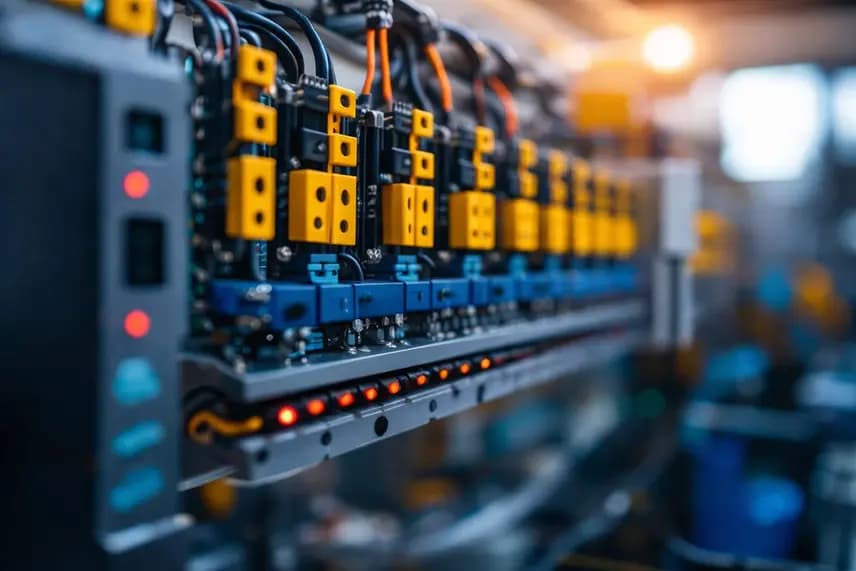
A programmable logic controller is an industrial computer designed to automate machines and processes. PLCs are built to operate reliably in harsh environments, including high temperatures, vibration, electrical noise and dust.
They are widely used in industries such as manufacturing, oil and gas, food processing and logistics. PLCs control equipment like conveyors, pumps, robotic systems and assembly lines, ensuring consistent and predictable operation.
PLCs are known for their durability, long service life and ease of maintenance. They are designed with modular architecture, allowing engineers to expand systems by adding I/O modules, communication cards and accessories such as PLC Batteries and other PLC accessories.
Because PLCs are part of a broader ecosystem of Allen-Bradley products, they integrate easily with industrial networks, drives and monitoring systems.
What Is a Microcontroller?
A microcontroller is a compact integrated circuit designed to control specific tasks within an embedded system. It typically includes a processor, memory and input/output peripherals on a single chip.
Microcontrollers are widely used in consumer electronics, automotive systems and embedded devices. In industrial environments, industrial microcontrollers can be applied to specialized machines or custom-built equipment where a dedicated control function is required.
Unlike PLCs, microcontrollers are not inherently designed for harsh industrial conditions. They require additional design considerations such as protective enclosures, power conditioning and custom circuitry to operate reliably in industrial settings.
Microcontrollers offer flexibility and can be programmed in languages such as C or C++. This makes them suitable for custom solutions, but also introduces additional development complexity compared with PLC systems.
Key Differences Between PLC and Microcontroller
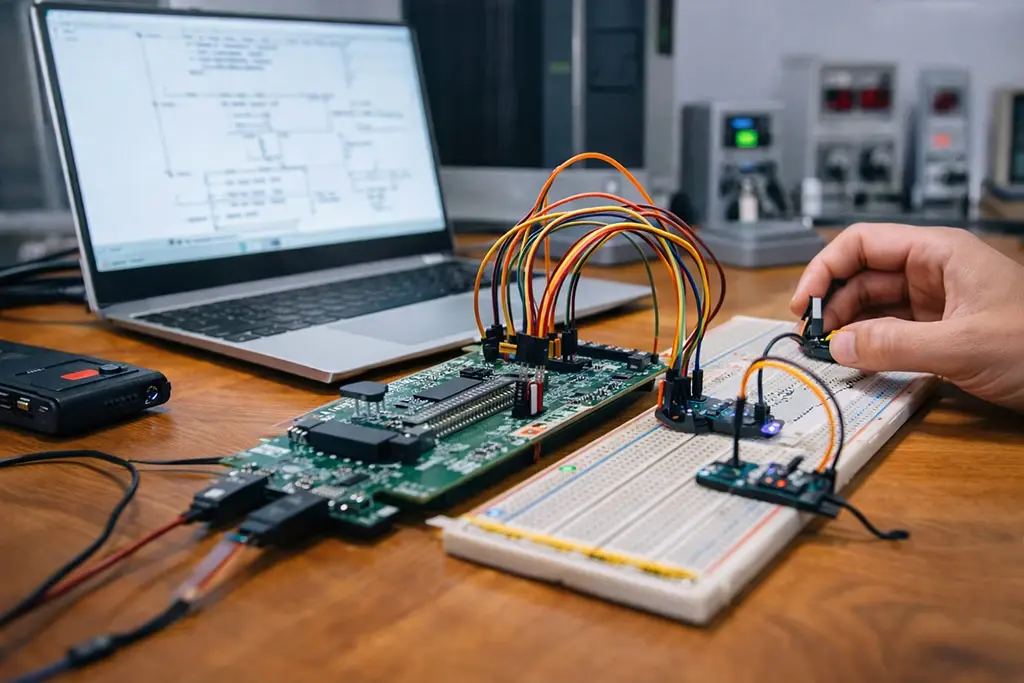
Understanding the PLC vs microcontroller comparison requires evaluating several key technical and operational factors.
Reliability and Durability
PLCs are built specifically for industrial use. They can withstand electrical noise, temperature variations and mechanical stress without performance degradation.
Microcontrollers, even when used as industrial microcontrollers, require additional protection and system design to achieve similar durability. Without proper design, they may be more sensitive to environmental conditions.
Programming and Ease of Use
PLCs are programmed using industrial languages such as ladder logic and structured text. These formats are widely understood by maintenance teams and engineers, making troubleshooting and updates easier.
Microcontrollers require programming in languages like C or C++, which demands specialized development skills. Maintenance personnel may find it more difficult to modify or troubleshoot embedded code.
Scalability and Expansion
PLCs offer modular expansion through additional I/O modules and communication cards. This allows systems to grow as production requirements change.
Microcontroller-based systems require custom hardware design for expansion. This can increase development time and reduce flexibility for future upgrades.
Cost and Initial Investment
Microcontrollers generally have lower initial hardware costs, making them attractive for small or cost-sensitive projects.
PLCs require higher upfront investment but provide long-term value through reliability, easier maintenance and reduced downtime.
Real-Time Performance
PLCs are designed for deterministic control, meaning they execute tasks in predictable time intervals. This is critical for industrial automation where timing consistency is essential.
Microcontrollers offer flexible performance but may require additional programming effort to achieve deterministic behavior.
Integration with Industrial Systems
PLCs are designed to integrate with SCADA systems, HMIs and industrial communication networks. They work seamlessly within existing automation architectures.
Microcontrollers require additional development effort to interface with industrial systems. Integration with networks and control platforms may require custom solutions.
PLC vs Microcontroller: Pros and Cons

Advantages of PLCs
PLCs provide several benefits for industrial applications:
- High reliability in harsh environments
- Standardized programming methods
- Easy integration with industrial systems
- Modular expansion capabilities
- Strong vendor support and long lifecycle
Disadvantages of PLCs
Despite their advantages, PLCs also have some limitations:
- Higher initial cost compared with microcontrollers
- Less flexibility for highly customized embedded applications
- Dependence on vendor-specific hardware and software
Advantages of Microcontrollers
Microcontrollers offer flexibility and cost advantages:
- Low hardware cost
- Compact size
- High customization potential
- Suitable for embedded systems and dedicated tasks
Disadvantages of Microcontrollers
However, microcontrollers present several challenges:
- More complex development process
- Limited built-in industrial protection
- Difficult maintenance and troubleshooting
- Reduced scalability for larger systems
When to Use a PLC in Your Production Line
PLCs are the preferred choice in many industrial environments due to their reliability and integration capabilities. They are ideal for:
- Large-scale manufacturing lines with multiple machines
- Harsh industrial environments with high vibration or temperature
- Safety-critical processes requiring predictable control
- Systems that require easy maintenance and long-term support
PLCs are also widely used in systems that integrate with drives, motors and automation platforms, as described in the comprehensive guide to Allen-Bradley drives.
When to Use a Microcontroller
Microcontrollers are better suited for smaller or specialized applications. They are commonly used in:
- Small standalone machines
- Cost-sensitive projects with limited scope
- Custom-built equipment requiring specific functionality
- Embedded control systems within devices
In these cases, the flexibility of microcontrollers can provide advantages over standard PLC platforms.
Cost Comparison: Short-Term vs Long-Term Investment
At first glance, microcontrollers appear more cost-effective due to lower hardware costs. However, total cost of ownership must be considered. PLCs reduce long-term costs through:
- Lower downtime risk
- Easier maintenance
- Availability of replacement parts
Microcontrollers may require additional engineering resources, custom development and longer troubleshooting time, which can increase operational costs over time.
How to Choose the Right Control System for Your Application
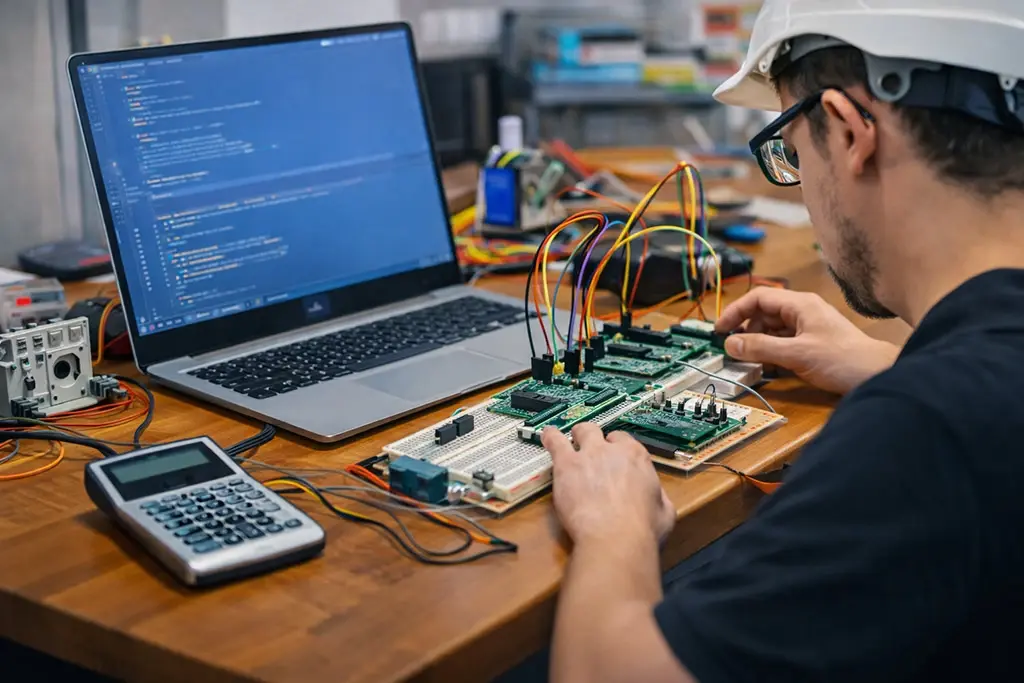
Define Your Application Requirements
Start by evaluating the size, complexity and criticality of your system. Consider how many inputs and outputs are required and whether the system will need expansion.
Consider Maintenance and Support
PLCs are easier to maintain because of standardized programming and widely available technical support. Microcontroller systems may require specialized expertise.
Evaluate Integration Needs
If your system must integrate with industrial networks, SCADA systems, or existing automation platforms, PLCs provide a more straightforward solution.
Assess Budget and ROI
Consider both initial cost and long-term value. While microcontrollers may reduce upfront expenses, PLCs often provide better return on investment through reliability and reduced downtime.
Common Mistakes When Choosing Between PLC and Microcontroller
Several common mistakes can lead to poor system performance or increased costs:
- Choosing based only on initial price without considering long-term impact
- Ignoring scalability requirements for future system expansion
- Underestimating maintenance complexity for custom microcontroller systems
- Overengineering simple systems with unnecessarily complex PLC solutions
Avoiding these mistakes helps ensure the selected control system aligns with operational needs.
PLC or Microcontroller: What’s the Better Choice?
The PLC vs microcontroller decision depends entirely on the application. PLCs are designed for industrial environments where reliability, scalability and integration are essential. Microcontrollers are better suited for compact, specialized systems where flexibility and cost are primary concerns.
For manufacturers seeking reliable automation solutions, PLCs remain the preferred option. They integrate seamlessly with broader control architectures and support long-term operational stability.
As a trusted distributor of Allen-Bradley parts, BSP Automation helps engineers select and source the right control components for their systems. Whether upgrading existing automation or designing new equipment, working with experienced suppliers ensures better system performance and long-term reliability.
FAQ
In most industrial applications, PLCs are preferred because they are designed for reliability, ease of maintenance and integration with industrial systems. They also provide standardized architectures that simplify troubleshooting and long-term operation in demanding environments.
Microcontrollers can replace PLCs in small or specialized applications, but they may not provide the reliability and scalability required for large industrial systems. Their use in industrial settings often depends on additional design measures to ensure stable operation.
Microcontrollers have lower upfront costs, but PLCs often provide better long-term value due to reduced downtime and maintenance. Over time, operational efficiency and system stability can outweigh the initial cost difference.
Yes. PLCs use standardized programming and are widely supported, making them easier to maintain and troubleshoot. Maintenance teams can quickly diagnose issues without requiring deep knowledge of embedded programming.
PLCs are widely used in manufacturing, oil and gas, food processing, logistics and many other industrial sectors. They are especially common in environments where continuous operation and process consistency are critical.

Have a question?
If you didn't find the automation part you were looking for, our support team is here to help. Just contact us, and we'll do our best to source the exact part you need. We're committed to meeting your needs and ensuring your satisfaction.
Contact Us Now