Industrial automation systems continue to grow in scale and complexity, requiring controllers that can handle high-speed processing, large I/O counts and advanced communication demands. ControlLogix PLCs are designed for these environments, offering a modular and performance-focused platform for large and demanding automation projects. This article provides a detailed overview of ControlLogix, explaining what it is, how it works, how it compares to other PLC platforms and where it is commonly used. For engineers, integrators and maintenance teams evaluating high-end control solutions, understanding ControlLogix capabilities is essential.
What Is ControlLogix?
Definition of ControlLogix PLC
ControlLogix is a high-performance programmable logic controller platform developed by Allen-Bradley, a brand of Rockwell Automation. A ControlLogix PLC is built for large-scale industrial systems that require fast execution, advanced networking and flexible system architecture.
ControlLogix PLCs support discrete, process, batch, motion and safety control within a single controller. This makes them suitable for complex applications where multiple automation disciplines must operate together without separate platforms.
Within the Allen-Bradley controller lineup, ControlLogix sits at the top tier, designed for systems that exceed the size and performance limits of mid-range PLCs.
Who Manufactures ControlLogix?
Allen-Bradley ControlLogix controllers are manufactured by Rockwell Automation. Allen-Bradley is one of the most established brands in industrial automation, known for PLCs, drives, motor control and networking solutions used worldwide.
As part of the Allen-Bradley portfolio, ControlLogix integrates directly with other Rockwell Automation hardware and software, creating a unified automation environment supported by a global ecosystem of products and services.
Overview of Allen-Bradley ControlLogix PLC Systems
What Makes Allen-Bradley ControlLogix Different?
Allen-Bradley ControlLogix systems are built around a modular architecture that separates processing, I/O, power and communication into independent components. This design allows systems to be configured precisely to application requirements.
Key characteristics include:
- High-performance controllers capable of handling large programs
- Modular expansion without redesigning the system
- Support for distributed and centralized architectures
ControlLogix PLCs are commonly selected for applications where system growth, redundancy and performance consistency are critical.
Allen-Bradley ControlLogix vs Other PLC Platforms
When comparing ControlLogix with other Allen-Bradley PLC platforms, size and complexity are the main differentiators. CompactLogix and MicroLogix controllers are used in smaller or mid-range systems, while ControlLogix targets enterprise-scale automation.
The difference between CompactLogix and ControlLogix often comes down to I/O capacity, processing power, redundancy options and network flexibility. ControlLogix is preferred in applications with multiple controllers, extensive communication requirements, or high availability demands.
ControlLogix PLC Architecture Explained
ControlLogix Chassis and Backplane
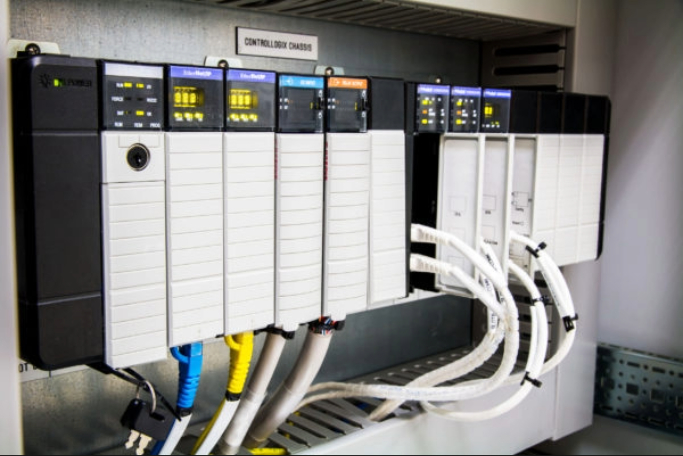
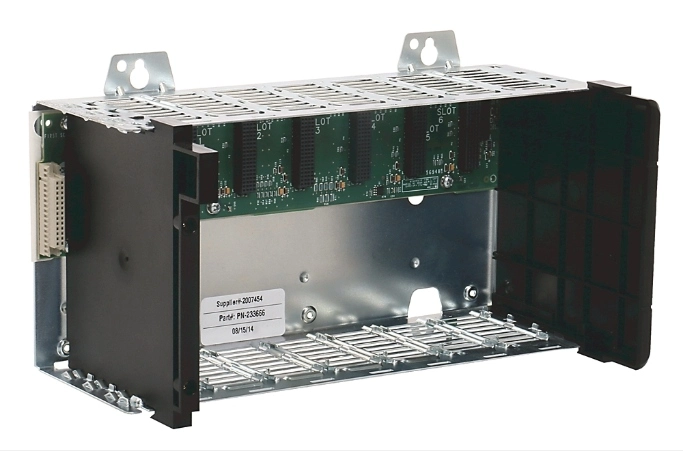
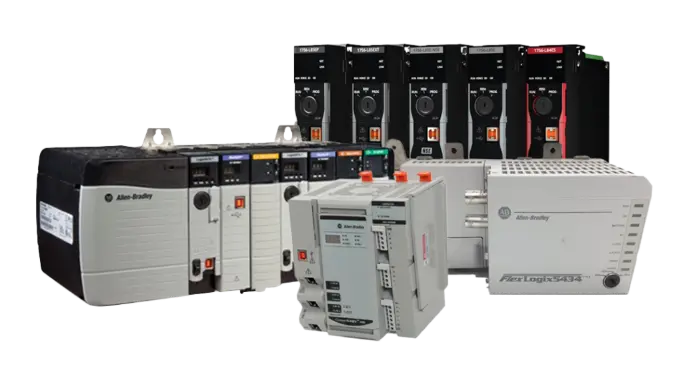
The ControlLogix chassis provides the physical framework for the system, housing controllers, power supplies, I/O modules and communication cards. The backplane enables high-speed data exchange between modules, ensuring consistent communication across the system.
Specialized components such as the
ControlLogix XT slot module are used in environments with extended temperature ranges, supporting reliable operation in harsh conditions.
ControlLogix Controllers (Processors)
The controller is the core of the ControlLogix system. It executes control programs, manages memory, handles communications and coordinates tasks across the platform.
ControlLogix controllers support:
- Multiple tasks and programs
- Deterministic execution
- Large memory capacity for complex logic
This allows a single controller to manage multiple machines or process areas within one system.
I/O Modules and Expansion Options
ControlLogix supports a wide range of digital and analog I/O modules to connect sensors, actuators and field devices. Modules such as the ControlLogix input module provide high-accuracy signal processing for demanding applications.
I/O can be local or distributed across the plant using remote racks, reducing wiring complexity and improving system flexibility.
Communication Modules and Networks
ControlLogix PLCs support multiple industrial communication protocols, including EtherNet/IP, ControlNet and DeviceNet. These networks allow seamless integration with drives, HMIs, safety systems and higher-level plant systems.
This communication flexibility makes ControlLogix suitable for large facilities where multiple subsystems must exchange data reliably.
Key Features of ControlLogix PLCs
High-Speed and Deterministic Performance
ControlLogix PLCs are designed for real-time control. Deterministic execution ensures that control tasks run predictably, which is essential for synchronized motion, coordinated processes and safety-related operations.
This level of performance supports applications where timing consistency directly affects product quality or system stability.
Modular and Scalable Design
The modular design allows ControlLogix systems to expand as production needs change. Additional I/O, communication modules, or controllers can be added without replacing existing infrastructure.
This makes ControlLogix suitable for long-term projects where future system growth is expected.
Integrated Safety and Motion Control
ControlLogix supports integrated safety and motion control within the same platform. Safety controllers and motion modules operate alongside standard logic, reducing system complexity and improving coordination.
This integration is particularly valuable in applications involving robotics, material handling and high-speed machinery.
Advanced Diagnostics and System Monitoring
Built-in diagnostics help identify faults, communication issues and module status in real time. These capabilities support faster troubleshooting and improved maintenance planning, helping reduce unexpected downtime.
Common Applications of ControlLogix PLCs
Manufacturing and Assembly Lines
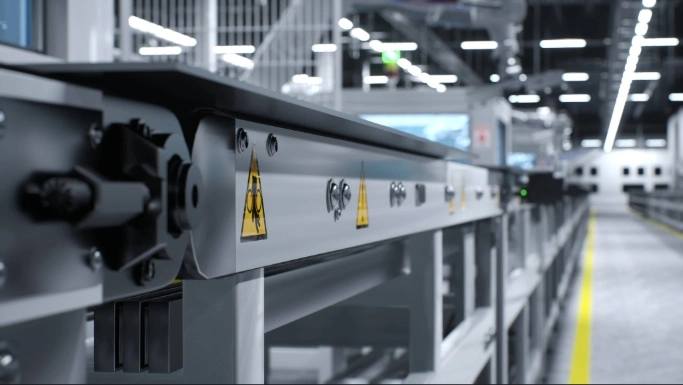
ControlLogix PLCs are widely used in automotive and discrete manufacturing environments. They control assembly lines, robotic cells and conveyor systems that require coordinated motion and high-speed logic execution.
Their ability to manage large I/O counts makes them suitable for complex production layouts.
Process Industries
In oil & gas, chemical and pharmaceutical plants, ControlLogix PLCs manage continuous and batch processes. Their communication capabilities support integration with instrumentation, safety systems and supervisory control platforms.
Food & Beverage and Packaging
ControlLogix is used in food and beverage production for batch processing, packaging lines and material handling systems. The platform supports precise control, repeatable operations and system-level coordination.
Energy, Utilities and Infrastructure
Power generation facilities and water treatment plants rely on ControlLogix PLCs for monitoring, control and communication across large infrastructure networks. Redundancy options make the platform suitable for critical applications.
When to Choose a ControlLogix PLC
Project Size and Complexity Considerations
ControlLogix is best suited for large-scale systems with many I/O points, multiple controllers, or distributed architectures. It is often selected when smaller PLC platforms cannot meet performance or expansion requirements.
Performance and Integration Requirements
Projects that involve extensive networking, integration with drives and motion systems, or high availability expectations benefit from ControlLogix architecture. The platform integrates well with the broader
Allen-Bradley parts ecosystem, including drives and motion products.
Conclusion: Why ControlLogix PLCs Are a Reliable Automation Choice
ControlLogix PLCs provide the performance, flexibility and system integration needed for modern industrial automation. Their modular architecture, communication capabilities and support for multiple control disciplines make them a strong choice for complex and large-scale applications.