Table of Content
Allen-Bradley HMI: Complete Guide to PanelView Models and Features

Written by
Artur Solakhyan
Freelance copywriter and editor
Published at13 May 2026
Estimated reading time5 min read
Share This:
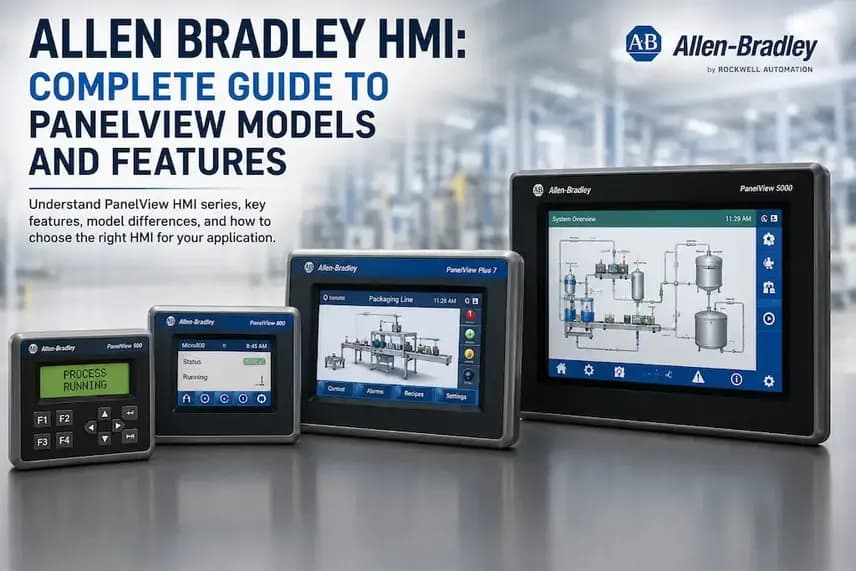
Human Machine Interfaces (HMIs) are a critical part of industrial automation, allowing operators to monitor, control and interact with machines and production systems. Among the most recognized solutions in this category are Allen-Bradley HMI systems, widely used across manufacturing, processing and infrastructure environments. Rockwell Automation’s PanelView product line has become a standard choice due to its reliability, integration with AB PLC models and broad range of parts for different automation requirements.
This guide explains the major PanelView series, key features, differences between models and practical selection considerations. Whether you are upgrading an existing interface or designing a new control system, understanding the Allen-Bradley HMI portfolio helps ensure better compatibility and long-term operational efficiency.
What Is an Allen-Bradley HMI?
An HMI, or Human Machine Interface, is a display and control device that allows operators to interact with industrial equipment. HMIs provide visual access to machine status, alarms, production data and control functions through touchscreens or keypad interfaces.
An Allen-Bradley HMI is part of Rockwell Automation’s industrial control ecosystem and is designed to integrate closely with Allen-Bradley PLCs, drives and automation networks. These systems are commonly used in production lines where operators need clear process visibility and reliable machine interaction.
Rockwell Automation is considered one of the leading global industrial automation brands and its HMI solutions are widely deployed across many industrial sectors.
Key Functions of HMIs in Industrial Environments
Allen-Bradley HMIs perform several important functions within automation systems:
- Visualization of production processes and machine status
- Operator interaction for machine control and adjustments
- Monitoring of alarms, diagnostics and system performance
These functions help improve operational awareness and reduce troubleshooting time during production.
Where Allen-Bradley HMIs Are Used
Allen-Bradley HMIs are used across many industrial sectors, including:
Their flexibility and integration capabilities make them suitable for both small standalone machines and large production systems.
Overview of PanelView HMI Series
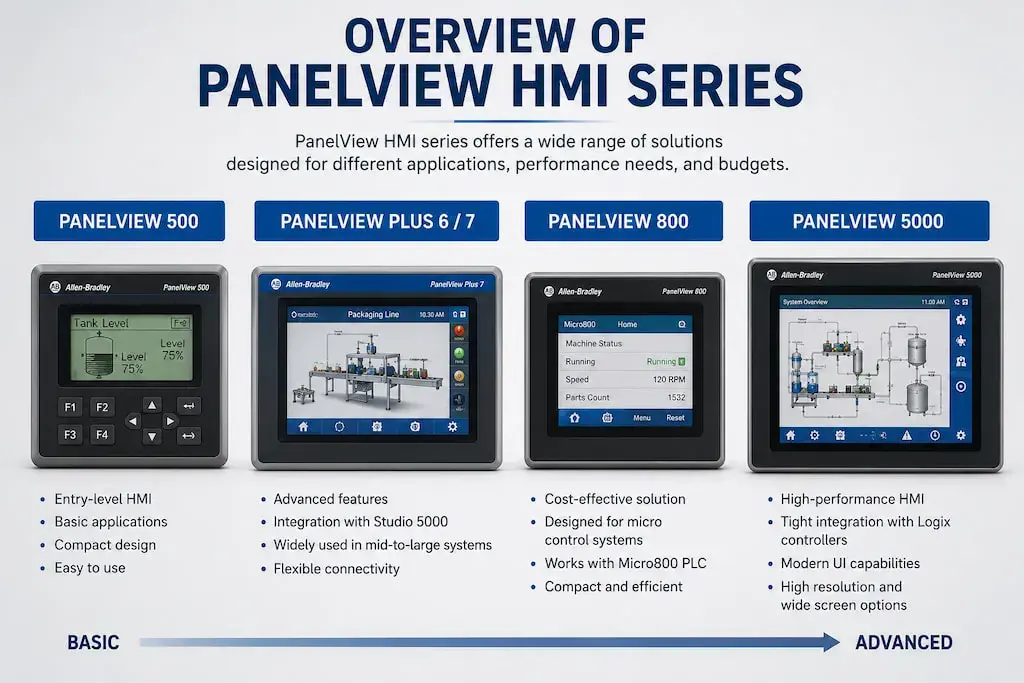
The PanelView family includes several HMI product lines designed for different system sizes, complexity levels and budget requirements. Some models focus on basic operator interaction, while others support advanced visualization and integration with modern control architectures.
Main PanelView Product Lines
The primary PanelView series includes:
- PanelView 500
- PanelView Plus 6 and 7
- PanelView 800
- PanelView 5000
Each series serves a different role within industrial automation systems.
PanelView Models Breakdown
PanelView 500 Series
The PanelView 500 series is considered an entry-level HMI platform designed for basic machine applications. These HMIs are compact and suitable for smaller systems requiring straightforward operator interaction.
Key characteristics include:
- Basic visualization functions
- Compact physical design
- Simple keypad or touchscreen interfaces
They are commonly used in standalone machines and smaller automation environments.
PanelView Plus 6 and 7
PanelView Plus 6 and 7 systems provide more advanced functionality and are widely used in mid-to-large automation systems. These models support enhanced graphics, expanded communication capabilities and integration with Studio 5000 environments.
Advantages include:
- Improved display performance
- Integration with modern PLC systems
- Better support for alarms and diagnostics
Because of these features, Allen-Bradley panel view systems from this series are frequently selected for larger industrial applications.
PanelView 800
The PanelView 800 series is designed as a cost-effective solution for smaller control systems. It is commonly paired with Micro800 PLC platforms and supports compact machine automation.
These HMIs are suitable for:
- Small control panels
- Cost-sensitive projects
- Basic process visualization
They provide a practical solution where advanced visualization features are not required.
PanelView 5000
PanelView 5000 represents the high-performance segment of the Allen-Bradley HMI PanelView portfolio. These HMIs integrate closely with Logix controllers and modern industrial communication architectures.
Key features include:
- Modern graphical interfaces
- High-speed communication
- Tight integration with Logix systems
- Advanced diagnostics and monitoring
These systems are commonly used in advanced automation projects requiring detailed operator interaction and centralized control.
Key Features of Allen-Bradley HMIs
Display and Touchscreen Capabilities
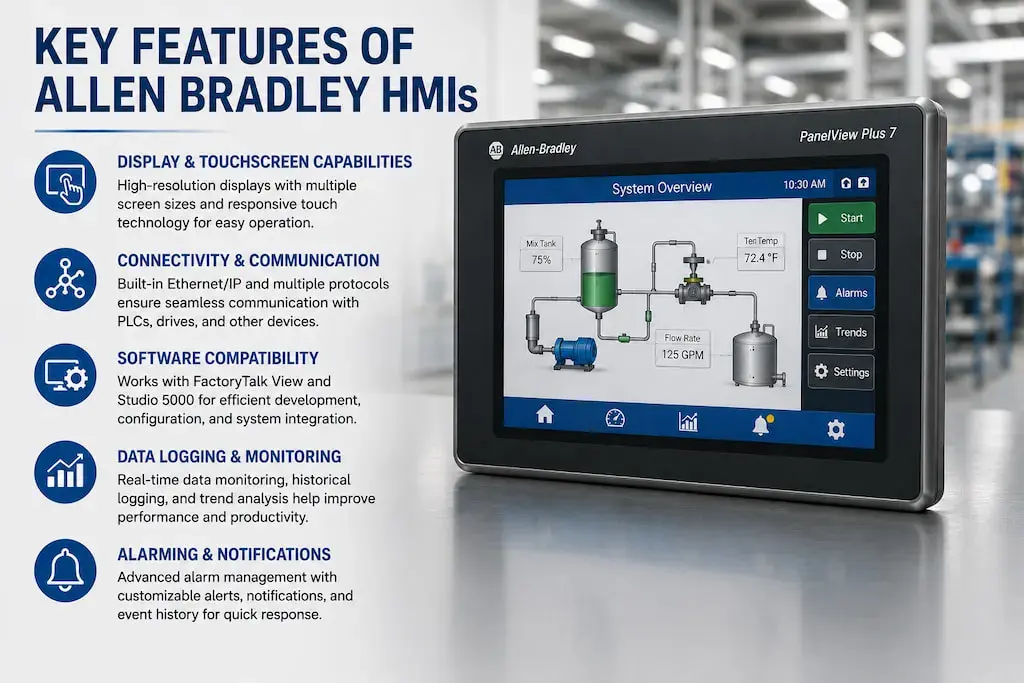
Allen-Bradley HMIs are available in multiple screen sizes and resolutions to support different applications. Depending on the model, displays may include touchscreen interfaces, keypad controls, or both.
Modern PanelView systems offer:
- Improved screen clarity
- Responsive touch technology
- Enhanced operator usability
These features help operators interact efficiently with production systems.
Connectivity and Communication Protocols
Communication is one of the strongest advantages of Allen-Bradley HMIs. Most modern PanelView systems support EtherNet/IP communication, allowing direct integration with Allen-Bradley PLCs and industrial networks.
These HMIs can communicate with:
- PLC systems
- Industrial drives
- SCADA platforms
- Remote I/O devices
Additional information about industrial communication architectures can be found in the guide to Allen-Bradley PLC communication protocols and types.
Software Compatibility
Allen-Bradley HMIs commonly use:
- FactoryTalk View
- Studio 5000 integration tools
These software platforms support HMI configuration, diagnostics and application development.
Compatibility with Logix-based PLC systems simplifies engineering and maintenance processes.
Data Logging and Alarming
Modern HMI systems support:
- Real-time production monitoring
- Alarm management
- Data logging and historical tracking
These capabilities help operators identify issues quickly and maintain stable production conditions.
PanelView vs Other HMI Brands
Comparison with Siemens HMIs
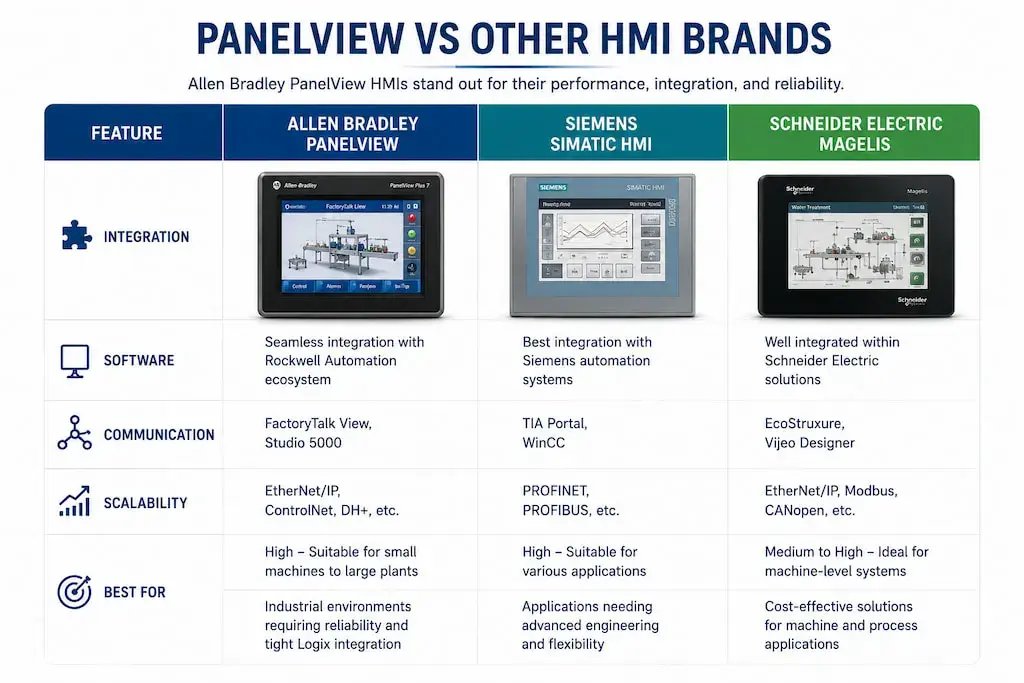
Siemens HMIs are widely used in European automation systems and offer strong integration with Siemens PLC platforms. However, Allen-Bradley HMIs often provide tighter integration within Rockwell Automation environments, especially when paired with Logix controllers.
Comparison with Schneider Electric HMIs
Schneider Electric HMIs are commonly used in machine-level applications and smaller automation systems. Allen-Bradley HMIs typically provide stronger compatibility with advanced Logix architectures and large-scale industrial systems.
When to Choose Allen-Bradley
Allen-Bradley HMIs are often the preferred choice when:
- Existing systems use Allen-Bradley PLCs
- EtherNet/IP integration is required
- Long-term scalability is important
- Motion control and drives are integrated into the system
These advantages make them suitable for facilities already operating within the Rockwell ecosystem.
How to Choose the Right PanelView HMI
Based on Application Complexity
Simple machines may only require entry-level HMIs such as PanelView 500 or PanelView 800 systems. More advanced production systems often require PanelView Plus or PanelView 5000 models.
Based on Budget
Smaller projects may prioritize lower-cost HMI solutions, while large automation systems often justify investment in advanced visualization and communication capabilities.
Based on System Compatibility
Compatibility with existing PLCs, drives and communication networks is essential. Facilities using Allen-Bradley drives and Logix controllers typically benefit from integrated PanelView solutions.
Based on Industry Requirements
Industry conditions also influence HMI selection. Environmental exposure, hygiene requirements and operational complexity all affect the type of interface required.
Common Use Cases and Applications
Factory Automation
PanelView HMIs are widely used in factory automation for machine monitoring, line control and operator interaction.
Process Control
In process industries, HMIs help operators monitor variables such as temperature, flow and pressure while responding to alarms and process changes.
Machine Building
Machine builders use PanelView systems to create standardized operator interfaces that improve usability and simplify maintenance.
Benefits of Using Allen-Bradley HMI Systems
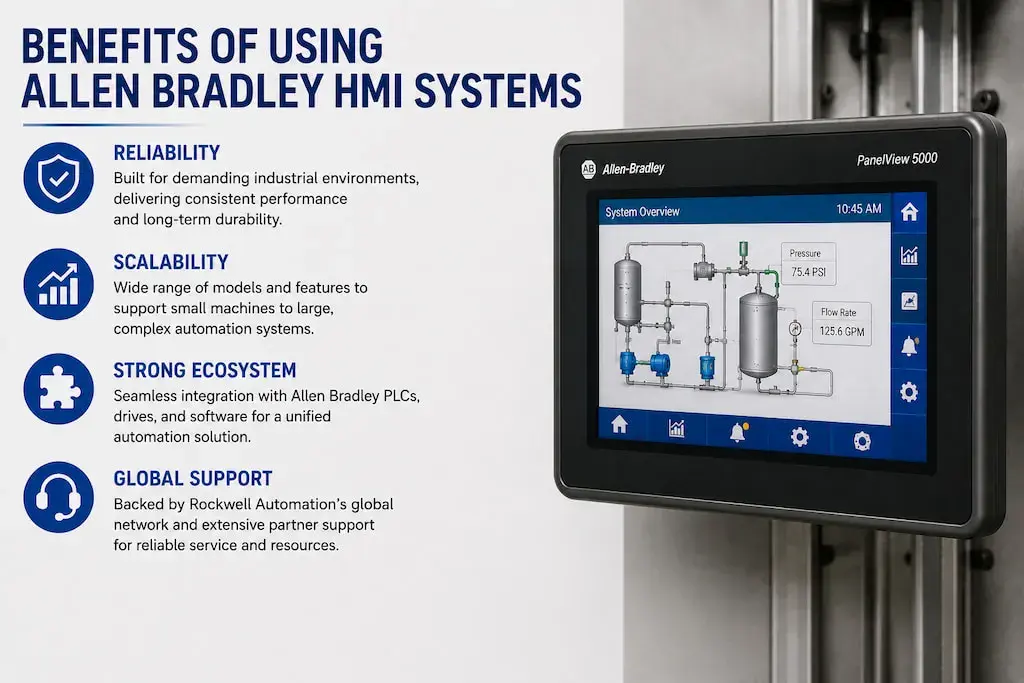
Allen-Bradley HMI systems provide several advantages for industrial automation:
- Reliable operation in demanding environments
- Scalability for expanding production systems
- Strong integration with the broader Rockwell ecosystem
- Global support and broad hardware availability
These systems work closely with Allen-Bradley human machine interfaces, PLCs and drives, helping create unified automation architectures.
Facilities working with legacy systems such as Micrologix PLCs may also benefit from upgrading HMI platforms to improve usability and integration capabilities.
As an industrial automation parts supplier, BSP Automation supports customers sourcing HMIs, PLCs and related components across the Rockwell Automation ecosystem.
For users new to industrial automation concepts, the automation terminology resource can help clarify common technical terms and system architectures.
Conclusion
Allen-Bradley HMIs remain one of the most widely used operator interface solutions in industrial automation. The PanelView family offers a broad range of models, from compact entry-level HMIs to advanced systems integrated with modern Logix architectures.
Choosing the correct HMI depends on application complexity, communication requirements, environmental conditions and long-term system goals. Facilities already operating with Allen-Bradley systems often benefit from seamless integration between HMIs, PLCs and drives.
For additional guidance, users can review resources such as buying Allen-Bradley PLC parts and comparisons of top PLC brands to better evaluate automation solutions.
FAQ
PanelView Plus systems are designed for broad industrial use with strong FactoryTalk integration, while PanelView 5000 HMIs provide tighter integration with Logix controllers and more advanced modern interface capabilities.
Most Allen-Bradley HMIs use FactoryTalk View software, while some advanced systems integrate directly with Studio 5000 environments.
Some PanelView models can communicate with third-party PLCs through supported protocols, but they are primarily optimized for Allen-Bradley automation systems.
Selection depends on application complexity, communication requirements, screen size needs and compatibility with existing automation hardware.
Allen-Bradley HMIs are widely used in manufacturing, food and beverage, oil and gas, automotive and many other industrial sectors requiring reliable operator interfaces.


Have a question?
If you didn't find the automation part you were looking for, our support team is here to help. Just contact us, and we'll do our best to source the exact part you need. We're committed to meeting your needs and ensuring your satisfaction.
Contact Us Now