Table of Content
Industrial IoT Protocols: A Complete Guide for Industrial Automation

Written by
Artur Solakhyan
Freelance copywriter and editor
Published at7 September 2026
Estimated reading time4 min read
Share This:
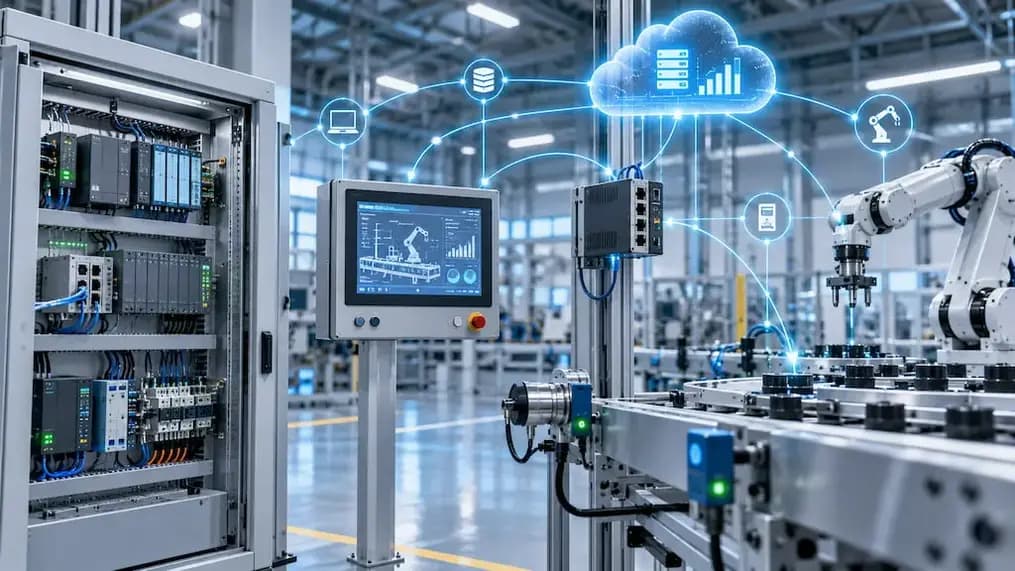
Industrial IoT connects machines, sensors, PLCs, control systems, software and cloud platforms so industrial data can move between different parts of an operation. Industrial IoT protocols define how these connected devices and systems exchange that data. Selecting the appropriate protocol affects communication reliability, interoperability, security, system expansion and real-time performance. Some protocols handle machine-level control, while others are designed for transferring operational data to SCADA, analytics, or cloud applications. Understanding their differences helps engineers build connected automation architectures suited to both current equipment and future requirements.
What Are Industrial IoT Protocols?
Industrial IoT communication protocols are standardized rules that determine how connected industrial devices transmit, receive and interpret data. They allow equipment from different systems and manufacturers to communicate within an automation architecture.
Traditional industrial protocols often focus on direct machine, controller and field-device communication. Newer IIoT-oriented technologies extend connectivity toward gateways, software platforms, analytics systems and cloud infrastructure.
How Industrial IoT Protocols Work
A typical communication path starts with sensors or machines collecting operational information. PLCs process this information, while gateways or industrial networks transfer selected data to SCADA, MES, analytics, or cloud applications.
Protocols define how messages are formatted, addressed, transmitted and interpreted at different points in this architecture.
Why Protocols Matter in Industrial Automation
Protocols affect whether devices can communicate reliably and whether data remains accessible throughout the system. Appropriate protocol selection supports interoperability, predictable communication, easier integration and future expansion without unnecessary changes to existing equipment.
Common Industrial IoT Protocols
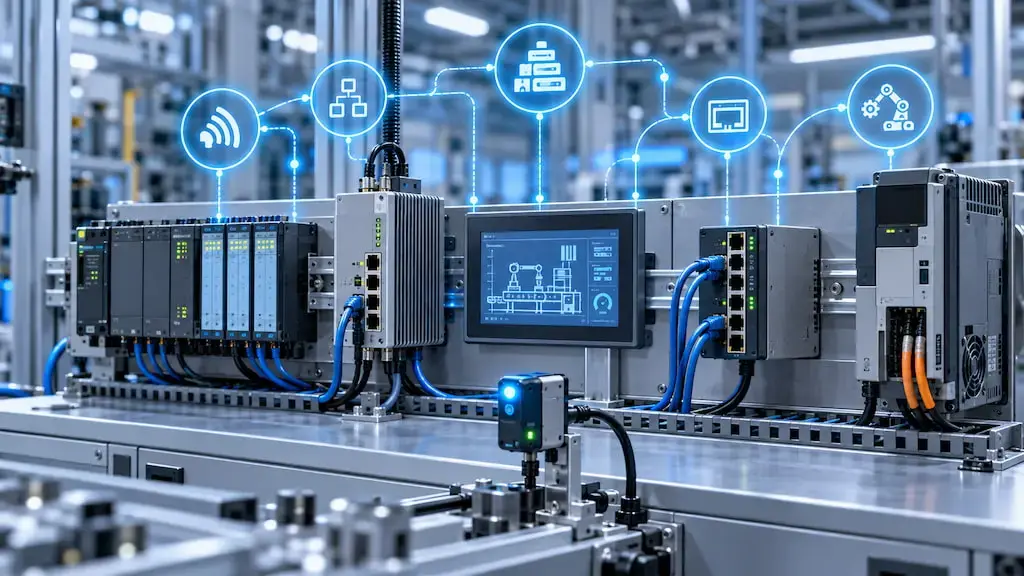
Several common protocols for industrial IoT sensors, controllers and software platforms are used across modern facilities. Each addresses different communication requirements.
MQTT
MQTT is a lightweight publish/subscribe messaging protocol. Devices or gateways publish information to topics, while applications subscribe to the information they require.
Its low bandwidth requirements make MQTT useful for transferring industrial data to centralized applications, remote monitoring platforms and cloud infrastructure. It can also accommodate growing numbers of connected devices efficiently.
OPC UA
OPC UA provides standardized information exchange between industrial equipment and higher-level applications. It is widely used to connect PLCs, machines, SCADA systems, MES platforms and other software.
Its information modeling and security capabilities make it particularly valuable where equipment from multiple vendors must exchange structured industrial data.
Modbus
Modbus remains common because of its relatively simple architecture and extensive installed base. Modbus TCP extends Modbus communication across Ethernet networks and can connect PLCs, sensors, meters and other equipment. Existing Modbus devices can also become part of IIoT architectures through gateways that transfer their data to newer platforms.
PROFINET and EtherNet/IP
PROFINET and EtherNet/IP are industrial Ethernet technologies used for communication among PLCs, drives, I/O, controllers and other automation equipment. They are particularly important where fast and predictable machine-level communication is required. Their architectures and ecosystems differ considerably. Our Profinet vs Ethernet/IP comparison covers these differences in greater detail.
How Industrial IoT Protocols Differ
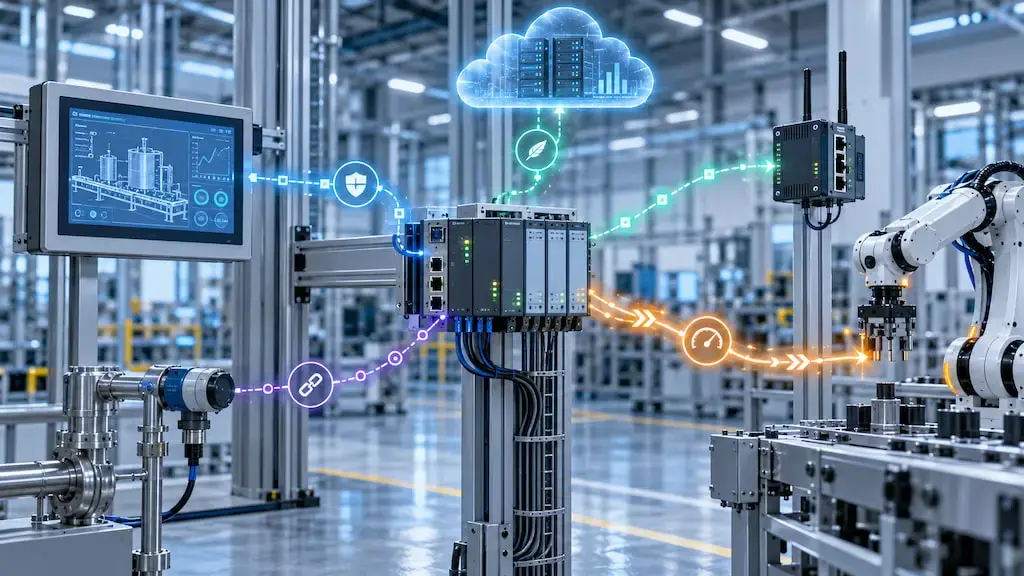
The different IoT protocols used in industry vary in communication architecture, performance, interoperability, security capabilities and intended applications. Consequently, no single protocol is appropriate for every layer of an industrial system.
Communication Model and Data Transfer
Protocols use different communication models. Modbus commonly follows a request/response structure, while MQTT uses publish/subscribe messaging. The appropriate approach depends on how frequently data must move and which devices or applications need it.
Real-Time Performance and Reliability
Machine control can require fast, predictable communication. Industrial Ethernet protocols are designed for demanding automation tasks, while protocols such as MQTT are generally better suited to exchanging operational data with supervisory or higher-level systems.
Interoperability and Integration
Existing equipment strongly influences protocol selection. A facility using Allen-Bradley controllers, for example, may already have an EtherNet/IP-based architecture. Integration requirements should account for both installed automation hardware and new software platforms.
How to Choose an Industrial IoT Protocol
Protocol selection should start with technical and operational requirements rather than choosing a technology based solely on popularity.
Consider Your Existing Industrial Equipment
Identify the communication technologies already supported by PLCs, sensors, drives, HMIs, SCADA systems and legacy machines. Devices such as those covered in our Photoelectric Sensor Types guide ultimately need compatible control and communication infrastructure to make sensing data useful.
Define Your Data and Connectivity Requirements
Determine the volume and frequency of data transmission, required response times, network conditions and communication destinations. Real-time machine control has different requirements from periodic condition-monitoring data sent to analytics software.
Evaluate Security and Scalability
For secure communication protocols industrial IoT architectures must consider authentication, encryption, access control, network segmentation and device management as part of the overall system design.
Scalability also matters. Consider how additional sensors, controllers, machines and software platforms could affect network traffic and system architecture.
Industrial IoT Protocols vs. Traditional Industrial Protocols
Traditional industrial communication technologies were primarily developed to exchange information among field devices, machines, PLCs and control systems. IIoT expands this communication model by connecting operational technology with IT infrastructure, analytics, enterprise software and cloud environments.
This does not mean established industrial protocols must be replaced. A production line may use EtherNet/IP or PROFINET for controller-level communication while OPC UA exchanges structured data with higher-level systems and MQTT carries selected information to remote applications.
Modern industrial IoT communication protocols therefore often operate together. Protocol choice becomes an architectural decision about which technology best serves each communication layer.
Building a Connected Industrial Automation System
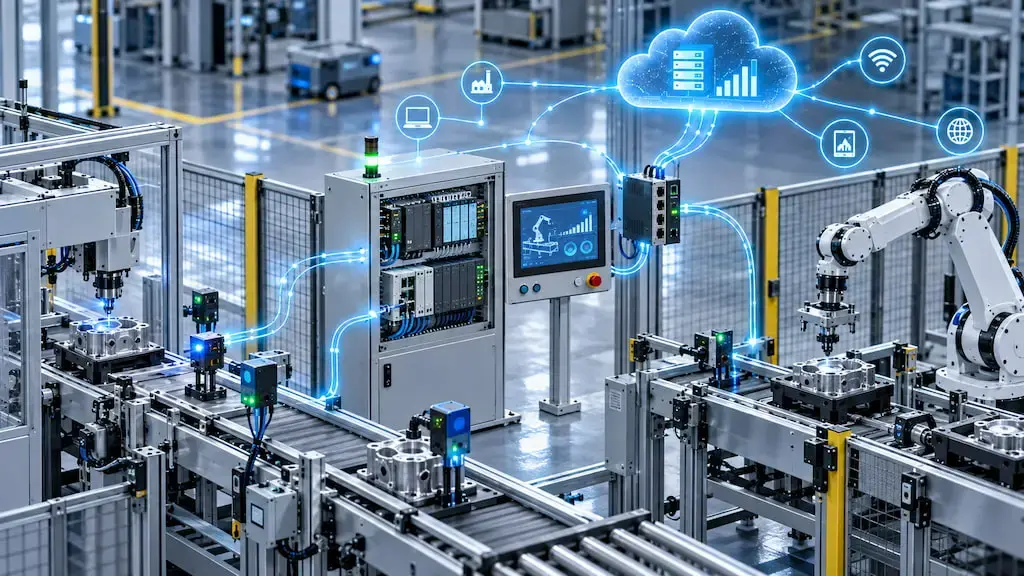
A connected industrial system may follow a structure such as:
Sensors and machines → PLC → industrial gateway → network → SCADA, MES, cloud, or analytics platform
Sensors collect process information, while the PLC handles machine logic and control. An industrial gateway can aggregate information, translate protocols and provide a connection between operational equipment and higher-level systems.
Organizations planning new architectures should consider compatibility across the entire automation ecosystem. Resources such as Top PLC Brands and Leading Automation Companies in 2026 can help compare established control platforms.
Integrating Legacy Equipment
Older machines do not necessarily need immediate controller replacement to participate in IIoT systems. Protocol gateways and converters can connect legacy serial or proprietary interfaces with Ethernet-based and IIoT communication layers. This approach can preserve existing equipment while making operational information available to newer monitoring and analytics systems.
Connecting Industrial Data to Higher-Level Systems
Once machine data is available through gateways and compatible protocols, it can be transferred to SCADA for supervision, MES for production management, analytics applications for performance analysis, or cloud platforms for remote processing.
A qualified automation parts supplier can also help businesses source controllers, communication components, sensors and related hardware required to maintain or expand connected industrial systems.
FAQ
Industrial IoT protocols are communication standards that determine how industrial devices, controllers, gateways, software and other connected systems exchange information.
There is no single protocol used for every IIoT application. MQTT, OPC UA, Modbus, PROFINET and EtherNet/IP are common choices for different communication layers and requirements.
Yes. MQTT is particularly useful for lightweight data transfer between gateways, devices, centralized applications and cloud platforms.
MQTT is primarily a lightweight publish/subscribe messaging protocol. OPC UA provides industrial interoperability, structured information modeling and standardized data exchange between automation and software systems.
Yes. Existing Modbus and Modbus TCP equipment can be incorporated into IIoT architectures directly or through gateways that connect it with modern software and network infrastructure.
Evaluate existing equipment, required communication speed, data volume, interoperability, security, network conditions, system architecture and future expansion before selecting a protocol.
Latest Articles

PowerFlex 525 IP Address Parameters: Configuration Guide
19 October 2026

Top PLC Brands and Leading Automation Companies in 2026
20 August 2026Have a question?
If you didn't find the automation part you were looking for, our support team is here to help. Just contact us, and we'll do our best to source the exact part you need. We're committed to meeting your needs and ensuring your satisfaction.
Contact Us Now