Robotics and Automated Production Line Solutions
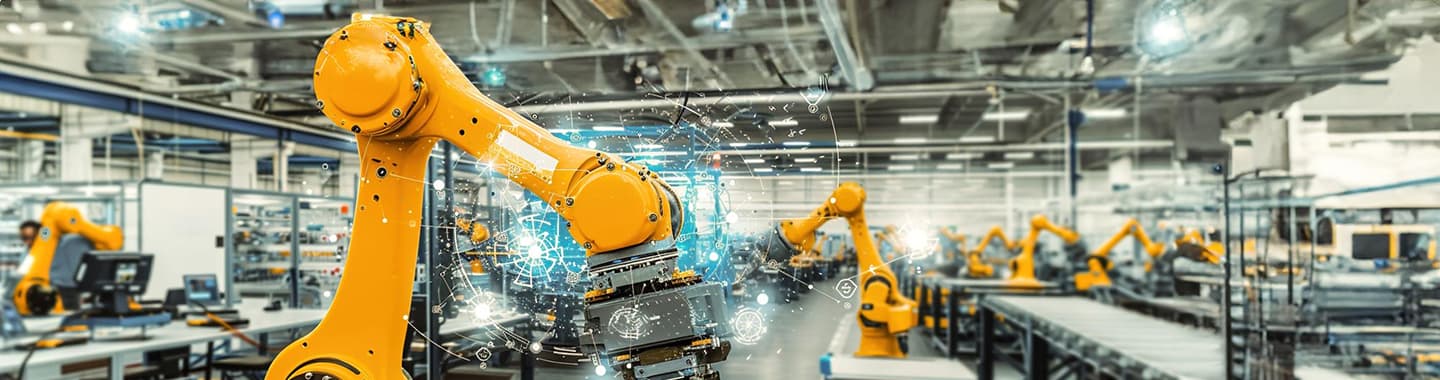
BSP Automation delivers industrial robotics solutions and automated production line technologies that help manufacturers improve efficiency, product quality, throughput and overall operational performance across modern industrial facilities.
Discover our partsAdvanced Industrial Robotics Solutions for Modern Manufacturing
Industrial robotics has transformed manufacturing by automating repetitive operations, improving production consistency and increasing output. Modern robotic systems perform complex production tasks with high precision while reducing manual intervention, supporting continuous operation and helping manufacturers remain competitive.
Automating Repetitive and Labor-Intensive Production Tasks
Robotic systems perform repetitive production tasks with consistent accuracy, allowing operators to focus on higher-value activities while reducing physical workload.
Increasing Throughput with High-Speed Robotic Operations
High-speed robotics increase production capacity by performing repetitive operations faster than manual processes while maintaining consistent cycle times.
Improving Product Consistency and Quality Control
Automation reduces production variation by performing assembly, handling and inspection processes with repeatable precision, resulting in higher product quality.
Supporting Flexible and Scalable Manufacturing Environments
Modern robotics can be reconfigured for changing production requirements, allowing manufacturers to expand capacity and introduce new products with minimal disruption.
Automated Production Line Solutions We Deliver
BSP Automation supports a wide range of automated production lines designed around specific manufacturing requirements. Our solutions combine robotics, automation controls, motion systems, sensors, machine vision and industrial communication technologies to create efficient production environments.

Fully Automated Production Lines
Fully automated production lines perform manufacturing operations with minimal manual intervention while maximizing productivity and process consistency.
Semi-Automated Manufacturing Systems
Semi-automated systems combine manual operations with automated equipment, providing an efficient balance between flexibility and productivity.
Robotic Assembly Systems
Robotic assembly systems automate complex assembly operations while improving positioning accuracy, repeatability and production speed.
Material Handling and Transfer Automation
Automated handling systems transport raw materials, components and finished products between production stages while reducing manual handling.
Packaging and End-of-Line Automation
Packaging automation increases throughput while improving labeling, palletizing, sorting, wrapping and product handling operations.
Inspection and Quality Assurance Automation
Machine vision systems and automated inspection equipment identify production defects early, supporting consistent product quality throughout manufacturing.
Pick-and-Place Robotic Systems
Pick-and-place robots transfer products rapidly between production stations while maintaining high positioning accuracy.
Conveyor and Transport System Integration
Integrated conveyor systems synchronize material movement with robotic workstations, creating efficient and continuous production flow.
Production Line Automation Solutions by Manufacturing Challenge
Manufacturers invest in production line automation to solve operational challenges that limit productivity, increase costs, or reduce product quality. Industrial robotics allows facilities to overcome these issues through intelligent automation.
Reducing Production Bottlenecks
Automation balances production flow by eliminating slow manual operations that restrict throughput and create production delays.
Addressing Labor Shortages Through Automation
Robotic systems reduce dependence on manual labor for repetitive tasks while supporting stable production despite workforce shortages.
Increasing Production Capacity Without Facility Expansion
Automation increases equipment utilization and production output without requiring additional manufacturing space.
Minimizing Human Errors in Assembly Processes
Robotic systems perform repetitive operations with consistent precision, reducing assembly errors and improving production quality.
Improving Workplace Safety in High-Risk Operations
Automation removes operators from hazardous environments involving heat, heavy equipment, repetitive lifting, or dangerous machinery.
Enhancing Traceability and Production Visibility
Integrated monitoring systems collect production data in real time, improving product traceability, reporting and manufacturing visibility.
Robotic Assembly Systems for Precision Manufacturing
Modern robotic assembly systems combine industrial robots, motion control, sensors, machine vision and intelligent software to perform highly accurate manufacturing operations. These systems increase repeatability while supporting complex production requirements across multiple industries.
Component Assembly Automation
Robotic assembly stations position, align and assemble components with exceptional accuracy, supporting high-volume manufacturing.
High-Speed Assembly Applications
High-speed robotic cells maintain rapid production cycles while delivering consistent assembly quality throughout continuous operation.
Multi-Station Robotic Workcells
Multi-station robotic workcells coordinate multiple robots and automation systems to perform sequential manufacturing operations efficiently.
Vision-Guided Assembly Systems
Machine vision technologies allow robots to identify component position, orientation and quality before performing assembly operations.
Automated Fastening, Insertion and Handling Processes
Robotic automation performs fastening, insertion, material handling and precision placement tasks while maintaining consistent quality and reducing production variability.
Technologies Powering Our Automated Production Lines
Modern industrial robotics solutions combine multiple automation technologies to create intelligent manufacturing environments. By integrating robotics, controls, monitoring platforms, industrial networking and safety systems, manufacturers can improve production efficiency, flexibility and operational performance.
Industrial Robots and Collaborative Robots
Industrial robots perform high-speed production tasks, while collaborative robots work safely alongside operators, providing flexibility for assembly, handling, packaging and inspection applications.
PLC and Motion Control Systems
PLCs and motion controllers coordinate robotic movements, production equipment, conveyors, drives and automated machinery to maintain synchronized manufacturing processes.
Machine Vision and Inspection Technologies
Machine vision systems inspect products, verify assembly quality, identify defects and guide robotic operations using real-time image processing.
SCADA and Manufacturing Monitoring Platforms
SCADA platforms collect production data, monitor equipment status, manage alarms and provide centralized visibility across automated production lines.
Safety Systems and Machine Protection Solutions
Industrial safety systems protect operators, machinery and production equipment through emergency stop systems, safety controllers, interlocks and protective monitoring devices.
Industrial Networking and Communication Infrastructure
Industrial communication networks connect robots, PLCs, sensors, HMIs and monitoring platforms to support reliable data exchange throughout automated production environments.
Why Manufacturers Partner with BSP Automation
BSP Automation supports manufacturers with automation expertise, technical consultation, component sourcing and long-term project support. Our team helps customers implement automation solutions that match production goals, operational requirements and future expansion plans.
Expertise Across Multiple Industrial Sectors
Our experience spans automotive, manufacturing, food processing, consumer goods, metallurgy and other industrial environments with diverse automation requirements.
Vendor-Neutral Automation Solutions
We recommend technologies based on project needs, allowing customers to select products that best match their existing systems and production objectives.
End-to-End Project Delivery
From component sourcing and system planning to implementation support, BSP Automation assists throughout every stage of an automation project.
Experienced Controls and Robotics Engineers
Our specialists provide guidance on automation architecture, robotics integration, controls selection and production line optimization.
Long-Term Technical Support and Maintenance
We continue supporting customers after implementation with technical assistance, replacement components and ongoing maintenance recommendations.
Business Benefits of Industrial Robotics Solutions
Manufacturers adopting industrial robotics solutions gain measurable operational and financial advantages. Automation increases efficiency while reducing production costs and improving manufacturing flexibility.
Higher Manufacturing Throughput
Robotic systems increase production output through continuous, high-speed operation with consistent cycle times.
Improved Product Quality and Consistency
Automated manufacturing reduces process variation, resulting in repeatable product quality and fewer production defects.
Reduced Operational Costs
Automation lowers labor costs, minimizes production waste and reduces equipment downtime through more efficient operations.
Faster Production Cycles
Robotics accelerates assembly, material handling, inspection and packaging operations while maintaining consistent quality.
Better Workforce Utilization
Employees can focus on supervision, programming, maintenance and quality improvement instead of repetitive manual tasks.
Enhanced Operational Safety
Automation reduces employee exposure to hazardous machinery, repetitive motion, heavy lifting and dangerous manufacturing environments.
Greater Production Flexibility
Modern robotic systems adapt to changing production requirements, allowing manufacturers to introduce new products with minimal disruption.
Industries We Support with Automated Production Line Solutions
Industrial robotics and production line automation improve productivity across a wide range of manufacturing sectors by increasing efficiency, consistency and operational reliability.
Automotive manufacturers use robotics for welding, assembly, inspection, material handling and component installation across high-volume production lines.
Automation supports hygienic processing, packaging, inspection, labeling and palletizing while maintaining consistent production quality.
Robotic systems improve packaging speed, product handling, sorting, labeling and end-of-line operations for consumer products.
Heavy industrial environments use robotics for material handling, machine tending, inspection and production processes requiring precision under demanding conditions.
 Ready to upgrade your production line?
Whether you need replacement parts or you're designing a new system, BSP Automation is ready to support you with expert advice and dependable automation components.
Contact UsFrequently Asked Questions About Industrial Robotics Solutions
Industrial robotics solutions combine robots, automation controls, sensors, software and monitoring technologies to automate manufacturing operations and improve production efficiency.
Facilities can implement fully automated production lines, semi-automated systems, robotic assembly cells, packaging lines, material handling systems, inspection stations and customized manufacturing solutions.
Robotic assembly systems improve accuracy, increase production speed, reduce manual errors and provide consistent quality throughout repetitive manufacturing operations.
Automotive, food and beverage, consumer goods, metallurgy, electronics, pharmaceutical, logistics and many other manufacturing industries benefit from automation.
Project duration depends on production complexity, equipment selection, system integration requirements and installation scope. Smaller projects may take weeks, while larger automation systems require several months.
Yes. Modern robotic systems are commonly integrated into existing production environments, allowing manufacturers to improve productivity without replacing complete production lines.
Return on investment varies by application but is typically achieved through higher throughput, reduced labor costs, improved product quality, lower waste and increased equipment utilization.
The most effective strategy is based on production goals, existing equipment, operational challenges, available space, budget and future expansion requirements.
Automated production lines typically combine industrial robots, PLCs, motion control systems, machine vision, SCADA platforms, industrial networking, sensors and safety technologies.
Yes. BSP Automation continues supporting customers with technical consultation, replacement components, sourcing assistance and long-term maintenance support for industrial automation systems.