Table of Content

Industrial Sensors: Types, Applications and Troubleshooting

avatar
Written by
Artur Solakhyan

Freelance copywriter and editor

Published at9 June 2026
Estimated reading time3 min read
Industrial Sensors: Types, Applications and Troubleshooting
Share This:

Industrial automation relies heavily on accurate data. Machines, production lines and control systems need continuous information about position, temperature, pressure, flow and countless other variables to operate efficiently. This is where industrial sensors become essential. They provide real-time feedback that helps manufacturers improve productivity, maintain quality standards and increase equipment reliability. From automotive assembly lines to food processing facilities, sensors play a central role in modern automation systems. This guide explains the major sensor types, common applications, troubleshooting methods and factors to consider when selecting sensors for industrial environments.


What Are Industrial Sensors and Why They Matter


Industrial sensors are devices that detect physical conditions and convert them into electrical signals that can be processed by PLCs, HMIs and other control systems.
Modern industrial automation sensors are used to:

  • Monitor equipment performance
  • Improve process accuracy
  • Support machine safety functions
  • Reduce downtime through early fault detection
  • Increase production efficiency

Without sensors, automated systems would have no way of determining machine status or reacting to changes in operating conditions. They are the foundation of modern factory automation and one of the most important components in Industry 4.0 environments.

Industrial Sensor Types


Different applications require different sensing technologies. Understanding various industrial sensor types helps engineers select the right device for their systems.

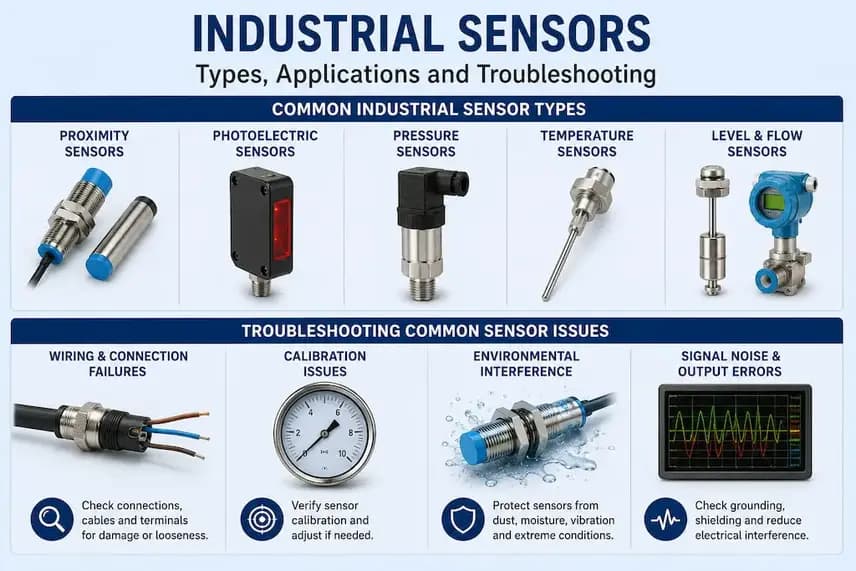
Proximity Sensors


Proximity sensors detect the presence or absence of objects without physical contact. They are commonly used in conveyors, assembly lines and packaging equipment.

Typical applications include:

  • Object detection
  • Position sensing
  • Counting operations
  • Machine sequencing

Photoelectric Sensors


Photoelectric sensors use light beams to detect objects and are widely used in sorting, packaging and material handling systems.
Advantages include:

  • Long sensing distances
  • High-speed operation
  • Detection of various materials
  • Non-contact operation

Pressure Sensors

Pressure sensors measure gas and fluid pressure in industrial systems.
They are commonly used in:

  • Hydraulic systems
  • Pneumatic equipment
  • Oil and gas facilities
  • Process industries

Temperature Sensors


Temperature sensors monitor thermal conditions to protect equipment and maintain process stability.
Applications include:

  • Furnaces
  • Industrial ovens
  • Motor monitoring
  • Chemical processing

Level and Flow Sensors


Level and flow sensors monitor liquids and gases in tanks and pipelines.
Common uses include:

  • Water treatment systems
  • Chemical processing
  • Beverage production
  • Oil storage facilities

Applications of Industrial Sensors in Automation
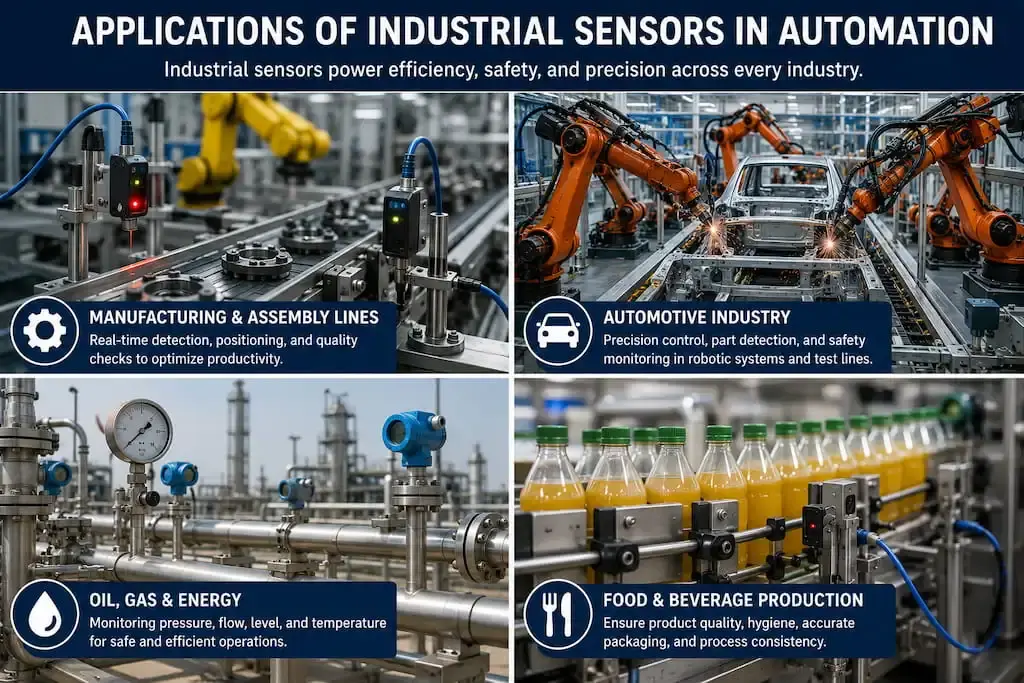
Applications of Industrial Sensors in Automation

Modern automation sensors improve efficiency and process reliability across numerous industries.

Manufacturing and Assembly Lines


Sensors provide real-time machine monitoring and support automated decision-making.
Typical functions include:

  • Part detection
  • Machine positioning
  • Product counting
  • Quality verification

Automotive Industry


The automotive industry relies heavily on sensors for robotic systems, assembly equipment and testing applications.
Sensors help maintain:

  • Production accuracy
  • Position control
  • Safety monitoring
  • Process consistency

Oil, Gas and Energy


Industrial sensors monitor:

  • Pressure
  • Flow
  • Temperature
  • Equipment condition

Reliable sensing technologies are essential in hazardous environments where process deviations can have significant consequences.

Food and Beverage Production


Sensors help maintain:

  • Product quality
  • Packaging accuracy
  • Hygiene standards
  • Process consistency

Accurate sensing reduces waste and improves production efficiency.

Industrial Automation Sensors: How They Work


Industrial automation sensors convert physical parameters into electrical signals that can be processed by control systems.
The process typically follows several steps:

  1. Detect a physical condition.
  2. Convert the condition into an electrical signal.
  3. Transmit the signal to a PLC or controller.
  4. Trigger actions based on programmed logic.

Sensors integrate directly with PLC systems and automation networks, allowing manufacturers to implement advanced monitoring and control strategies. Many systems use components from leading PLC brands and industrial control platforms to process sensor data efficiently.

Common Problems and Troubleshooting Industrial Sensors
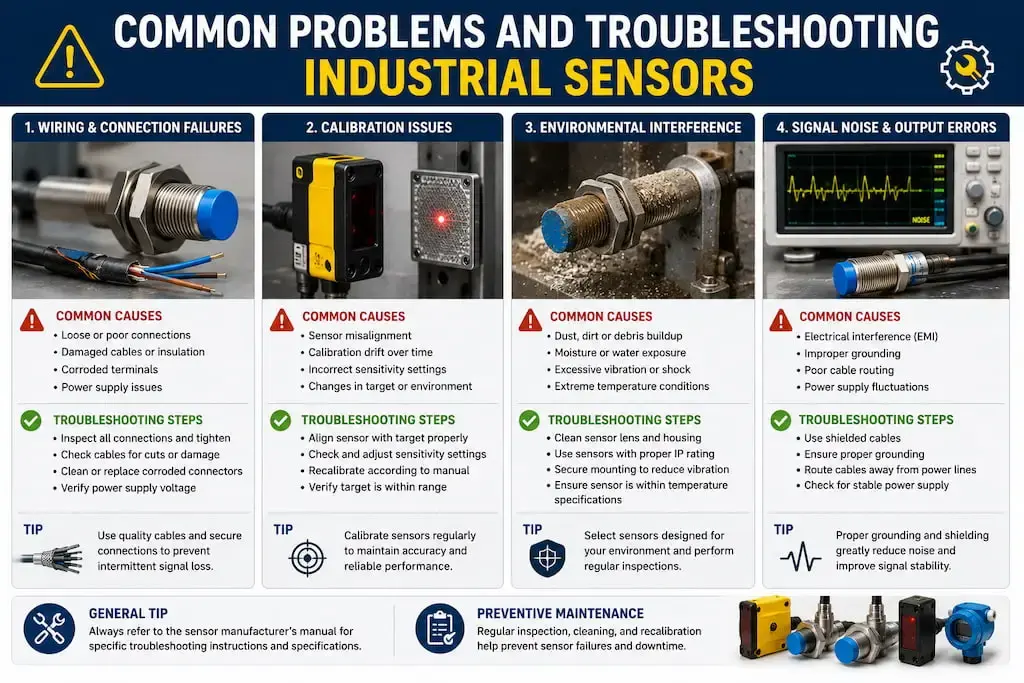
Common Problems and Troubleshooting Industrial Sensors

Even high-quality sensors can experience issues over time.

Wiring and Connection Failures


Common problems include:

  • Loose connections
  • Damaged cables
  • Corroded terminals
  • Signal interruptions

Regular inspections can prevent unexpected failures.

Calibration Issues


Over time, sensors may drift from their original calibration settings.
This can result in:

  • Incorrect measurements
  • Process deviations
  • Reduced product quality

Periodic recalibration helps maintain accuracy.

Environmental Interference


Harsh environments can affect sensor performance.
Common issues include:

  • Dust buildup
  • Moisture exposure
  • Excessive vibration
  • Temperature extremes

Selecting sensors with suitable protection ratings is essential.

Signal Noise and Output Errors


Electrical interference can create unstable sensor readings.
Potential causes include:

  • Improper grounding
  • Damaged shielding
  • Electromagnetic interference
  • Poor cable routing

Proper installation practices can significantly reduce these issues.

How to Choose the Right Factory Automation Sensors
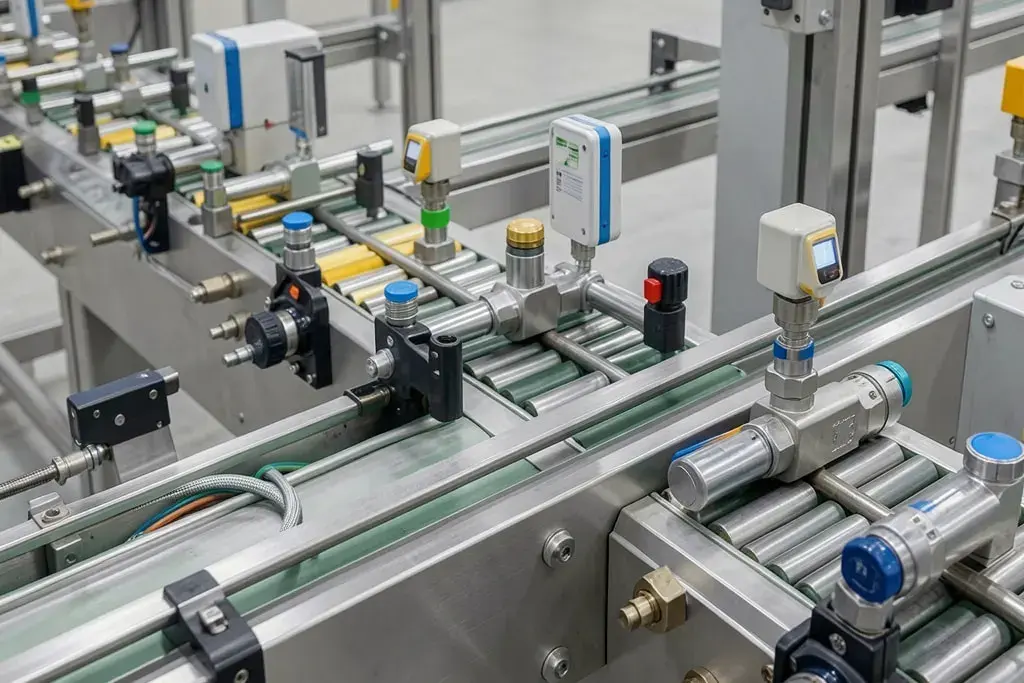
How to Choose the Right Factory Automation Sensors

Selecting the right factory automation sensors requires evaluating several important factors.

Environmental Conditions


Consider:

  • Temperature ranges
  • Humidity
  • Dust exposure
  • Chemical resistance
  • Vibration levels

Accuracy and Response Time


Applications such as robotics and precision manufacturing require highly accurate sensors with fast response times.

Output Type and Compatibility


Ensure sensor outputs are compatible with existing PLC and control systems.

Many applications use equipment from Allen-Bradley parts and other major automation platforms that require specific signal types and communication methods.

Supplier Reliability and Support


Reliable technical support and product availability are important considerations, especially for critical production environments.

Major Suppliers of Industrial Sensors


Several companies are recognized as major suppliers of industrial sensors, including:

  • Siemens
  • IFM
  • Keyence
  • Pepperl+Fuchs
  • Schneider Electric
  • ABB
  • SEW-EURODRIVE

BSP Automation supplies products from many leading industrial manufacturers and provides access to sensor solutions from:


As a global parts supplier, BSP Automation supports manufacturers looking for reliable industrial sensing technologies and automation components.

Maintenance Tips for Long Sensor Life


Preventive maintenance can significantly increase sensor lifespan and improve system reliability.
Recommended practices include:

  • Regular cleaning
  • Cable inspections
  • Periodic recalibration
  • Verification of mounting hardware
  • Monitoring for environmental damage
  • Reviewing sensor diagnostics

Predictive maintenance strategies supported by technologies such as AI in industrial automation are also helping manufacturers detect sensor issues before failures occur.
For additional definitions and terminology related to automation systems, readers can consult BSP's industrial automation terms resource.

FAQ

Industrial sensors monitor physical conditions such as temperature, pressure, position and flow to help automate machines and processes. They provide the real-time data needed for control, safety and production optimization.

The most common sensor types include proximity sensors, photoelectric sensors, pressure sensors, temperature sensors and level and flow sensors. Each type is designed for specific measurement and detection applications.

Start by checking wiring, power supply, calibration and environmental conditions. Reviewing PLC diagnostics and testing sensor outputs can also help identify the source of a problem.

The terms are often used interchangeably. Industrial sensors generally refer to sensors used in manufacturing and process industries, while automation sensors may also include devices used in broader automated systems.

Consider environmental conditions, required accuracy, response time, communication requirements and compatibility with existing control systems. Working with experienced suppliers can also help ensure the correct sensor selection for your application.
Have a question?

If you didn't find the automation part you were looking for, our support team is here to help. Just contact us, and we'll do our best to source the exact part you need. We're committed to meeting your needs and ensuring your satisfaction.

Contact Us Now